
What's Happening?
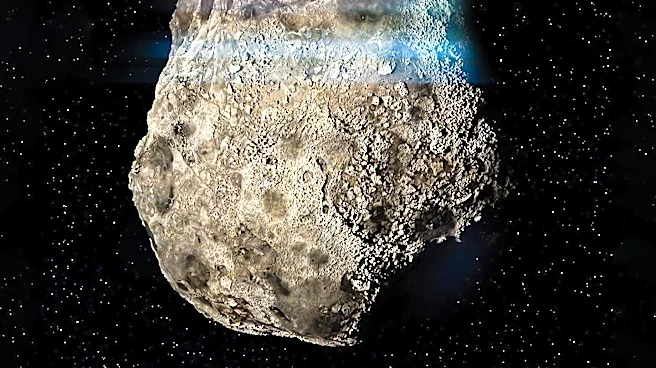
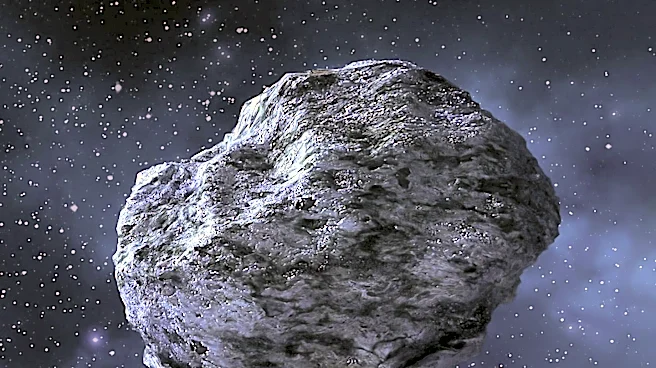
A new study suggests that three of Neptune's moons—Larissa, Galatea, and Proteus—may have formed from the remnants of ancient icy worlds shattered by Neptune's largest moon, Triton. The research, published in Science Advances, indicates that these moons contain
clay minerals, which are typically formed under high heat conditions, suggesting they originated from the deep interiors of large icy bodies. This finding provides a unique opportunity to study the internal composition of icy worlds, which are usually hidden beneath thick ice layers. The study utilized data from the James Webb Space Telescope to analyze the chemical makeup of these moons.
Why It's Important?
The discovery offers new insights into the formation and evolution of Neptune's moon system and the broader dynamics of the outer solar system. Understanding the composition and history of these moons could provide clues about the processes that shaped the solar system's icy bodies. The presence of clay minerals, which require significant heat to form, challenges existing theories about the cold outer solar system and suggests that these moons may have experienced significant geological activity. This research could influence future missions to Neptune and other ice giants, as scientists seek to explore these distant worlds in greater detail.
What's Next?
The study's authors suggest that a dedicated spacecraft mission to Neptune would be the next logical step to further investigate these findings. Such a mission could provide more detailed data on Neptune's moons and rings, helping to confirm the study's conclusions. However, the development of such missions is complex and time-consuming, requiring significant resources and planning. In the meantime, further analysis of data from the James Webb Space Telescope and other observatories will continue to refine our understanding of Neptune's moons.