





What's Happening?
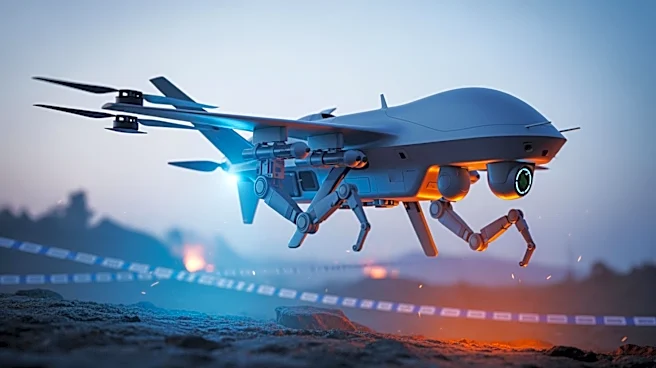
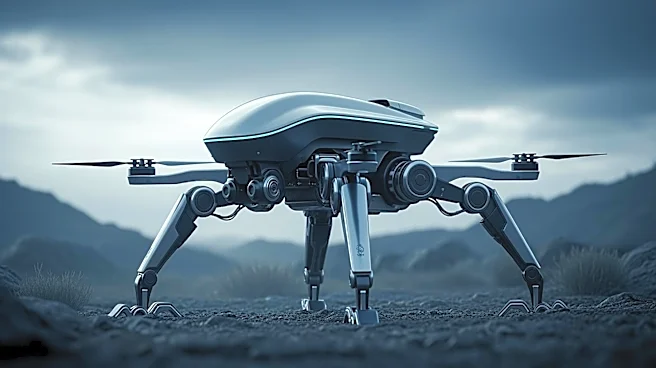
Ukraine is advancing its military capabilities by building a drone army, aiming to replace a significant portion of its frontline manpower with autonomous technology. The Ukrainian army plans to procure approximately 25,000 unmanned ground vehicles in the
first half of the year, doubling last year's total. This initiative is part of a broader strategy to enhance military efficiency and reduce human risk in combat. The Ukrainian approach contrasts sharply with the U.S. military's current practices, which are hindered by legal and contractual constraints that prevent rapid adaptation and innovation. In Ukraine, the ability to quickly modify and deploy technology on the battlefield is a decisive advantage, whereas in the U.S., defense companies maintain strict control over the intellectual property of military systems, slowing down the adaptation process.
Why It's Important?
The development of Ukraine's drone army highlights a significant shift in military strategy, emphasizing the importance of rapid technological adaptation in modern warfare. This shift poses a challenge for the U.S. military, which is currently unable to match Ukraine's pace due to regulatory and contractual barriers. The U.S. military's reliance on major defense contractors and their control over technology limits the ability to quickly implement changes necessary for high-intensity combat. This situation underscores a potential vulnerability in U.S. military operations, as the ability to rapidly adapt to changing battlefield conditions becomes increasingly crucial. The contrast between Ukraine's agile approach and the U.S.'s more rigid system could influence future military policies and procurement strategies.
What's Next?
As Ukraine continues to innovate and expand its use of autonomous military technology, the U.S. may face pressure to reevaluate its current defense procurement and adaptation processes. This could lead to policy changes aimed at increasing flexibility and reducing the control of defense contractors over military technology. Additionally, the success of Ukraine's approach may prompt other countries to adopt similar strategies, potentially reshaping global military dynamics. The U.S. military may need to explore new models of innovation that balance the need for rapid adaptation with the maintenance of safety and security standards.
Beyond the Headlines
The Ukrainian model of military innovation raises broader questions about the future of warfare and the role of technology in combat. The shift towards autonomous systems and rapid technological adaptation could redefine military power, moving away from traditional hardware-based measures to software-driven capabilities. This evolution may also have ethical and legal implications, as the use of autonomous systems in warfare challenges existing norms and regulations. The U.S. military's response to these developments could influence international standards and the future direction of military technology.