




What's Happening?
The fifth edition of the SPACESTAR Conference, SPACESTAR’26, is scheduled to take place from November 11 to 13, 2026, in Tunis, Tunisia. This event will gather researchers, policymakers, governmental institutions, international organizations, industry
leaders, entrepreneurs, and innovators from Africa, the Mediterranean region, and beyond. The conference aims to explore the profound transformation of the global space sector, driven by NewSpace initiatives, artificial intelligence, Earth observation technologies, geospatial intelligence, and digital innovation. A key focus will be on space governance, policy, regulation, industrial development, and international partnerships, specifically aimed at strengthening the participation of emerging nations in global space activities. The program will cover a broad range of themes, including space sciences, satellite technologies, Earth observation, GNSS, artificial intelligence, geospatial intelligence, digital twins, climate resilience, agriculture, water management, and disaster risk reduction.
Why It's Important?
The SPACESTAR’26 conference is significant because it highlights the growing importance of space technologies for economic growth, environmental resilience, food security, disaster risk management, digital transformation, and technological sovereignty, particularly for emerging nations. By fostering dialogue between academia, government, industry, and international organizations, the conference seeks to promote new collaborative opportunities. The discussions on space governance and policy are crucial for establishing frameworks that ensure equitable access and participation in the evolving global space ecosystem. For the U.S., this conference underscores the global shift in space capabilities and the increasing number of international actors, which could influence future collaborations, competition, and the development of international space law and norms. The focus on AI and digital innovation in space also aligns with U.S. strategic interests in maintaining technological leadership and addressing the governance challenges posed by advanced technologies in space.
What's Next?
The conference in November 2026 is expected to generate discussions and potential frameworks for international cooperation in space, particularly concerning emerging nations. The outcomes could influence future policy decisions and investment strategies in the global space sector. It is anticipated that the event will showcase practical pathways for transforming space-based data and technologies into actionable solutions for sustainable development. The emphasis on strengthening African and Mediterranean capacities through knowledge sharing and innovation ecosystems suggests a future where more countries play a significant role in space activities. For U.S. stakeholders, monitoring the discussions and outcomes will be important for understanding shifts in global space power dynamics and identifying potential areas for collaboration or competition in space technology and governance.
Beyond the Headlines
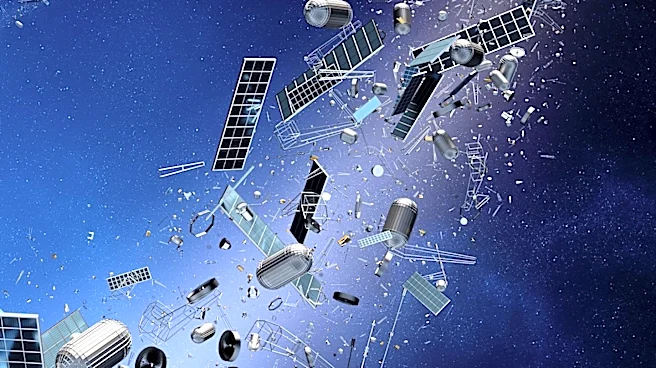
The focus on 'NewSpace initiatives' and the participation of 'emerging nations' points to a broader democratization of space access and capabilities. This trend could challenge traditional power structures in space, where a few dominant nations have historically held sway. The discussions on space governance will likely touch upon critical issues such as orbital debris management, spectrum allocation, and the responsible use of space resources, which have ethical and legal implications for all spacefaring entities. The integration of AI and digital innovation into space activities also raises questions about data privacy, cybersecurity, and the potential for autonomous systems in space, necessitating robust international frameworks to prevent misuse and ensure stability. The conference's emphasis on sustainable development through space technologies highlights a growing recognition of space as a tool for addressing global challenges, moving beyond purely scientific or military applications.