







What's Happening?
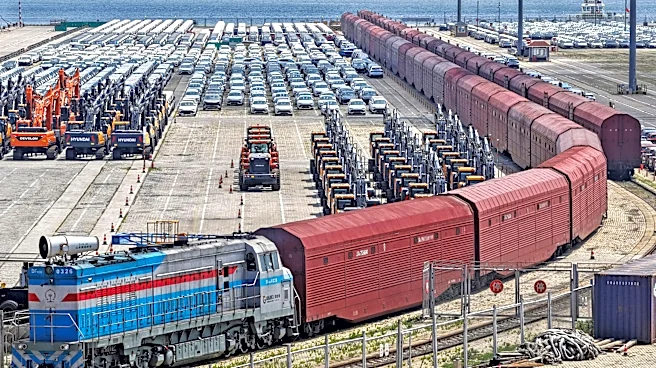
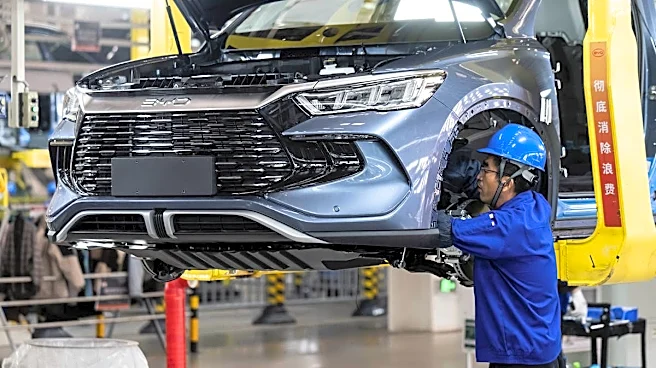
China's car exports have reached a significant milestone, topping 1 million units in June for the first time, as the country's overall overseas shipments increased by 27%. This surge in exports is part of a broader trend that has kept China on track to potentially
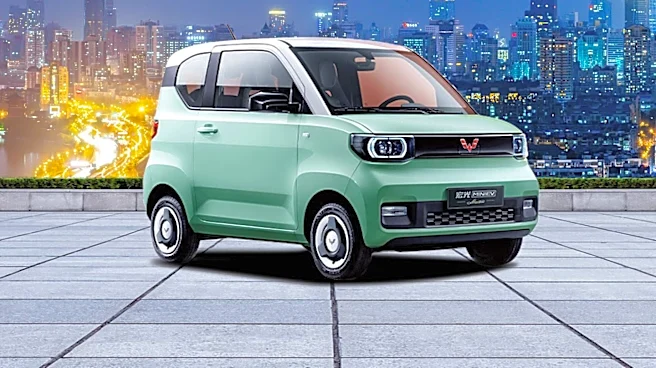
match or exceed last year's record trade surplus of $1 trillion. The increase in exports includes a notable rise in sales of Chinese brands such as BYD and Jaecoo, which are gaining market share in Europe. This development comes despite the backdrop of a curtailed tariff war initiated by President Trump. The European Union (EU) has expressed concerns over China's growing trade surplus, which has reached €900 million a day, and the impact on European industries, particularly the automotive sector.
Why It's Important?
The surge in China's car exports is significant as it highlights the shifting dynamics in global trade, particularly between China, the U.S., and the EU. The increase in exports, especially in electric vehicles and hybrid cars, poses a competitive threat to established European car manufacturers, potentially leading to job losses and restructuring within the industry. Volkswagen, for instance, is considering reducing its workforce significantly as part of a major realignment. The situation underscores the ongoing trade tensions and the potential for further economic and political ramifications as the U.S. and EU evaluate their trade policies with China. The rise in exports also reflects China's strategic positioning in the global market, leveraging its manufacturing capabilities amidst suppressed domestic demand.
What's Next?
As China continues to expand its export footprint, the U.S. and EU may consider implementing new trade measures to protect their domestic industries. The EU has already initiated discussions on potential restrictions on Chinese imports, which could lead to heightened trade tensions. Additionally, the U.S. may reassess its trade policies in response to China's growing economic influence. The outcome of these discussions and potential policy changes will be crucial in shaping the future of international trade relations. Businesses and policymakers will need to navigate these complexities to mitigate risks and capitalize on opportunities in the evolving global market.
Beyond the Headlines
The rise in China's exports, particularly in the automotive sector, could have long-term implications for global supply chains and economic power balances. The increased competition from Chinese brands may drive innovation and efficiency improvements among established manufacturers. However, it also raises questions about the sustainability of such rapid export growth and its impact on global economic stability. The situation highlights the need for strategic economic planning and international cooperation to address the challenges and opportunities presented by China's expanding role in global trade.