






What's Happening?
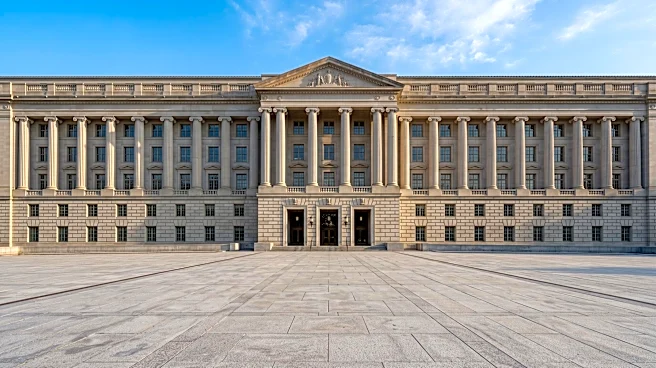
The Brookings Institution has released an updated 'IRS Spotlight' report, detailing the significant weakening of the Internal Revenue Service's capacity over the past two years. The agency has experienced a quarter of its workforce departing and a substantial
loss of senior leadership. The report also points to a serious erosion of taxpayer data privacy protections and ongoing threats of political interference, which could compromise the IRS's nonpartisanship and independence. The 'IRS Spotlight' is an online compendium designed to provide researchers, journalists, and the public with regularly updated data and analysis on federal tax administration. The latest update expands its scope to six key areas: taxpayer services, compliance and enforcement, leadership and workforce, modernization and technology, taxpayer privacy and immigration, and nonpartisanship. This expansion includes new data, visualizations, and subject-specific timelines to offer a comprehensive view of the changes impacting the agency. For instance, the report addresses questions regarding the duration of IRS commissioner vacancies, the impact of workforce cuts, taxpayer wait times for phone assistance, and changes in audits of large corporations. A new section specifically focuses on nonpartisanship, documenting instances of political interference, such as a president's personal lawsuit against the IRS, attempts to create a 'weaponization fund,' and alleged targeting of audits against perceived political opponents. Quantitative data, like a survey indicating only 19% of Treasury employees are 'very' or 'completely' confident in reporting violations without retaliation, further underscore these concerns.
Why It's Important?
The weakening of the IRS has profound implications for the U.S. federal government and its citizens. A diminished IRS capacity can lead to reduced tax collection, impacting federal revenue and the funding of essential public services. The loss of experienced staff and leadership can hinder the agency's ability to effectively administer tax laws, process returns, and provide taxpayer services, potentially leading to delays and inefficiencies. Erosion of taxpayer data privacy protections raises concerns about the security of sensitive personal and financial information, which could undermine public trust in the agency. Furthermore, threats of political interference jeopardize the IRS's ability to operate impartially, ensuring fair and neutral tax administration regardless of political affiliations. This lack of impartiality could lead to a perception of unequal treatment under tax law, eroding the foundational principle of a fair tax system. The report's focus on nonpartisanship highlights the critical need for an independent IRS to maintain public confidence and ensure the integrity of the U.S. tax system. Any perceived or actual political manipulation of the agency could have long-lasting negative effects on compliance and the overall functioning of the government.
What's Next?
The Brookings Institution's 'IRS Spotlight' will continue to track changes and provide accessible updates on these crucial challenges facing federal tax administration. This ongoing monitoring aims to inform decision-makers, journalists, and the public about the evolving state of the IRS. The findings are likely to fuel ongoing debates in Congress regarding IRS funding, staffing, and oversight. Lawmakers may consider legislative measures to address the agency's capacity issues, enhance data privacy protections, and safeguard its independence from political influence. Public and civil society groups are expected to use this data to advocate for reforms that strengthen the IRS and ensure its ability to serve the public effectively and impartially. The report's detailed analysis of political interference instances could also prompt increased scrutiny from watchdog organizations and the media, potentially leading to calls for investigations or accountability measures. The long-term implications will depend on the willingness of political leaders to address the systemic issues highlighted by the Brookings Institution, particularly concerning the agency's resources and its insulation from political pressures.
Beyond the Headlines
Beyond the immediate operational and political concerns, the weakening of the IRS touches upon fundamental aspects of democratic governance and the social contract. A tax system perceived as unfair or politically manipulated can lead to widespread distrust in government institutions. This distrust can manifest in reduced tax compliance, further exacerbating revenue shortfalls and potentially leading to a cycle of underfunding and diminished capacity. The ethical dimension of taxpayer data privacy is also critical; the government's ability to protect sensitive information is a cornerstone of its relationship with citizens. Any compromise in this area can have far-reaching consequences for individual privacy and national security. Culturally, the perception of the IRS as a politically weaponized entity could deepen partisan divides and undermine the shared civic responsibility of contributing to public services. The long-term shift could be towards a less effective and less trusted tax administration, impacting the government's ability to address national priorities and maintain economic stability. The report implicitly calls for a re-evaluation of how the IRS is viewed and supported, not merely as a revenue collector, but as a vital institution for maintaining the rule of law and public trust.