


What's Happening?
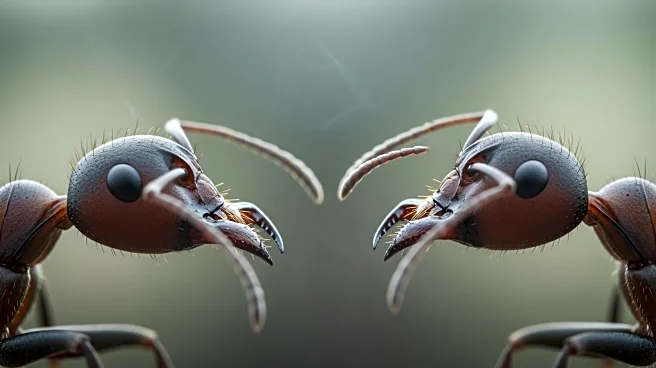
Recent research has revealed that common air pollutants, such as ozone and nitric oxide, can alter the scent of ants, causing them to attack their nest-mates. Ants rely heavily on scent for recognition within their colonies. When exposed to pollutants, the chemical
structure of alkenes, which are part of the ants' colony-specific scents, is broken down. This alteration leads ants to perceive their nest-mates as intruders, prompting aggressive behavior. The study, conducted by Markus Knaden and his team at the Max Planck Institute for Chemical Ecology, involved exposing ants to various concentrations of ozone. The results showed that even minor changes in scent could trigger significant behavioral changes, including aggression and neglect of larvae.
Why It's Important?
The findings highlight the broader ecological impact of air pollution, extending beyond human health concerns to affect insect behavior and ecosystem stability. Ants play crucial roles in ecosystems, such as seed dispersal and soil aeration. Disruption in their behavior due to pollution could lead to inefficiencies and potential collapse of ecosystems reliant on their activities. This study adds to the growing body of evidence that air pollution is a significant factor in the decline of insect populations worldwide. Understanding these impacts is vital for developing strategies to mitigate pollution's effects on biodiversity and ecosystem services.
What's Next?
Further research is needed to explore the long-term ecological consequences of altered ant behavior due to pollution. Scientists may investigate how these changes affect entire ecosystems and whether similar effects are observed in other insect species. Policymakers and environmental agencies might consider these findings when formulating regulations to control air pollution levels. Public awareness campaigns could also be initiated to highlight the indirect effects of pollution on biodiversity and ecosystem health.
Beyond the Headlines
The study underscores the interconnectedness of environmental health and biodiversity. It raises ethical considerations about human responsibility for pollution and its unintended consequences on non-human species. The research also prompts a reevaluation of current pollution thresholds, suggesting that even levels deemed safe for humans may have detrimental effects on wildlife. This could lead to a shift in environmental policies and a push for more stringent pollution controls.