





What's Happening?
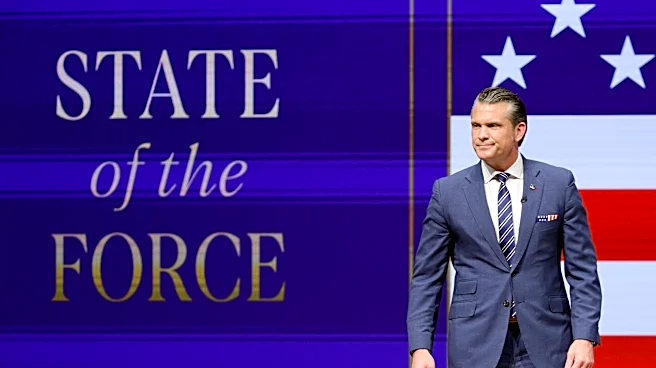
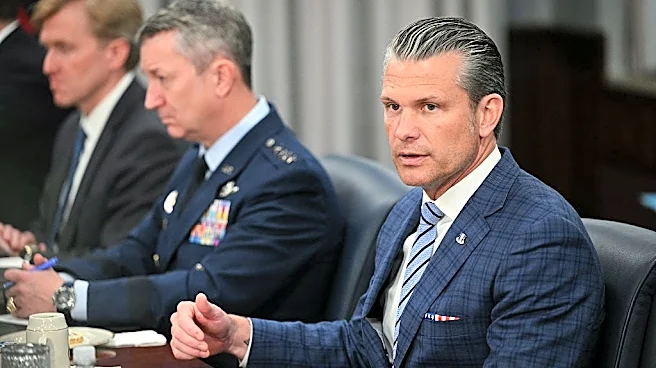
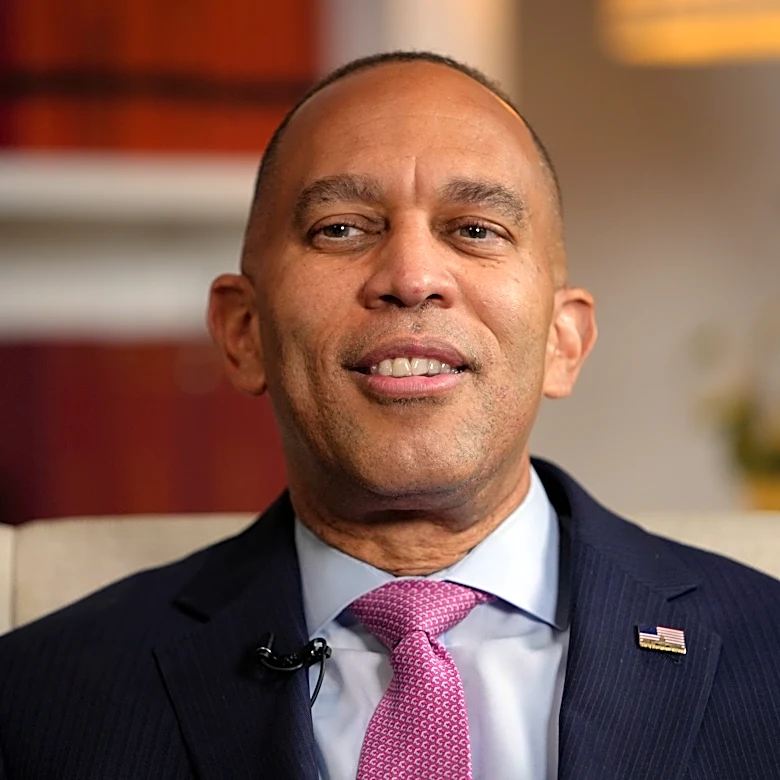
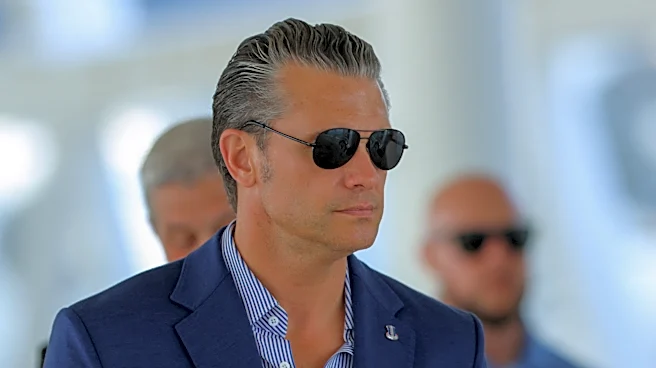
Representative Pat Ryan (D-N.Y.), a former U.S. Army intelligence officer, has strongly criticized Defense Secretary Pete Hegseth's recent 'State of the Force' address. Ryan, who served two tours in Iraq, called Hegseth's speech 'beneath the dignity'
of his office during an interview with MS NOW. Hegseth's remarks reportedly focused on what he termed 'woke' culture within the Defense Department and included a transgender slur. Ryan accused Hegseth of prioritizing 'culture war BS' over addressing critical military issues and stated that Hegseth's 'performative stuff' is worsening. Hegseth also claimed to have directed the firing of 10% of generals and admirals and an additional 10% reduction in general officer positions, which he referred to as 'accountability' rather than a 'purge.' Ryan's sentiments were echoed by Representative Chris Deluzio (D-Pa.), another Iraq War veteran and former U.S. Navy officer.
Why It's Important?
This criticism from Democratic representatives highlights a growing partisan divide regarding the leadership and direction of the U.S. military. Representative Ryan's assertion that Hegseth has caused 'generational damage' to the military, which he describes as one of the last revered apolitical institutions, underscores concerns about the politicization of defense. The alleged focus on 'culture war BS' by the Defense Secretary, as opposed to strategic military concerns, could impact military readiness, morale, and public trust. The reported 'purge' of high-ranking officers, even if framed as accountability, could lead to instability within the military's command structure and potentially deter qualified individuals from pursuing military careers if they perceive political motivations behind leadership changes. This situation could also affect the U.S.'s standing on the global stage, as a perceived internal division within its defense leadership might be exploited by adversaries.
What's Next?
The criticism from Representatives Ryan and Deluzio is likely to intensify scrutiny on Defense Secretary Hegseth's policies and public statements. Further congressional hearings or inquiries into the alleged 'purge' of military leadership and the impact of 'culture war' rhetoric on the armed forces could be initiated. Military advocacy groups and veterans' organizations may also voice their concerns, potentially leading to increased public debate on the state of the U.S. military. Hegseth may face pressure to clarify his priorities and demonstrate how his actions contribute to military effectiveness rather than political agendas. The ongoing tension could also influence future defense budget allocations and policy decisions, as lawmakers may seek to address perceived weaknesses or politicization within the Pentagon. The long-term implications for military recruitment and retention, particularly among diverse groups, will also be a key area to watch.
Beyond the Headlines
The deeper implications of this situation extend to the fundamental principle of an apolitical military, a cornerstone of democratic governance. Representative Ryan's concern about the 'generational damage' to this institution suggests a potential erosion of trust and cohesion within the armed forces. When military leadership is perceived as being driven by political ideology rather than strategic expertise, it can undermine the military's effectiveness and its ability to serve the nation impartially. This trend could also set a dangerous precedent, encouraging future administrations to similarly politicize military appointments and policies, thereby weakening the institutional integrity of the U.S. defense apparatus. The use of divisive language, such as 'transgender slur,' further exacerbates internal divisions and could alienate segments of the military population, impacting diversity and inclusion efforts crucial for a modern fighting force. This situation highlights a broader societal struggle over cultural values intersecting with national security.