
What's Happening?
A preliminary report by the National Transportation Safety Board (NTSB) has revealed that a private jet crash in Maine, which resulted in the deaths of all six people aboard, was preceded by a delay in takeoff after deicing. The report indicates that the plane
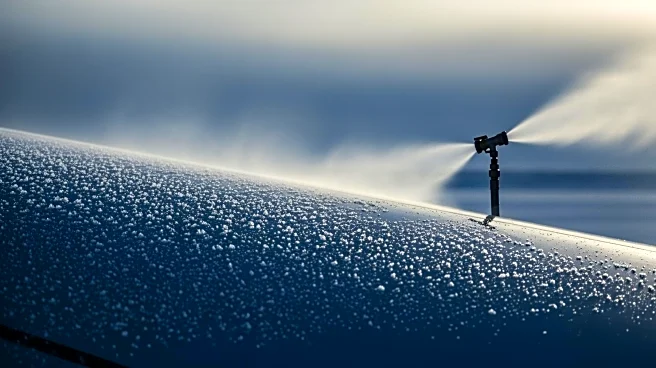
remained on the ground for 17 minutes after deicing, exceeding the Federal Aviation Administration's (FAA) recommended maximum of 9 minutes. This delay occurred during a snowstorm, and the plane ultimately crashed shortly after takeoff. The cockpit voice recorder captured the pilot discussing the timing, suggesting a misunderstanding of the guidelines. Aviation safety experts have pointed out that the delay likely led to ice accumulation on the wings, contributing to the crash. The NTSB is continuing its investigation, examining factors such as the crew's experience with cold weather operations and the quality of the deicing process.
Why It's Important?
The findings of the NTSB report underscore the critical importance of adhering to deicing guidelines to ensure aviation safety. Ice accumulation on aircraft wings can lead to catastrophic loss of control, as evidenced by this crash. The incident highlights potential gaps in pilot training and understanding of deicing procedures, particularly in challenging weather conditions. The broader aviation industry may need to reassess training protocols and deicing procedures to prevent similar tragedies. This crash also raises questions about the adequacy of current FAA guidelines and whether they need to be updated to prevent future incidents.
What's Next?
The NTSB will continue its investigation, focusing on the crew's experience and the deicing procedures used at the airport. The final report, expected next year, will provide a comprehensive analysis of the crash's causes. The aviation industry may see increased scrutiny on deicing practices and pilot training, potentially leading to regulatory changes. Stakeholders, including airlines and regulatory bodies, will likely review and possibly revise safety protocols to enhance compliance with deicing guidelines.
Beyond the Headlines
This incident may prompt a reevaluation of how private jets, often used by high-profile individuals and businesses, are managed in adverse weather conditions. The crash also serves as a reminder of the inherent risks in aviation and the need for constant vigilance and adherence to safety protocols. The tragedy has broader implications for the aviation community, emphasizing the need for continuous improvement in safety standards and practices.