


What's Happening?
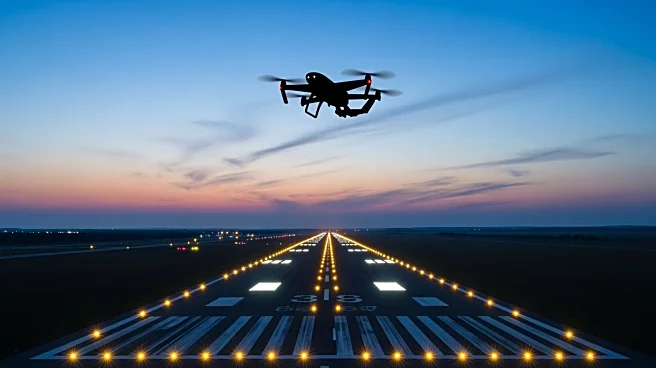
The Federal Aviation Administration (FAA) temporarily closed the airspace over El Paso, Texas, due to an incursion by a Mexican drug cartel drone, according to the Trump administration. Transportation Secretary Sean Duffy stated that the U.S. military
and FAA acted swiftly to neutralize the threat, ensuring no danger to commercial travel. However, this explanation has been met with skepticism. U.S. Representative Veronica Escobar, representing El Paso, expressed doubts about the administration's account, stating that Congress was not informed of such a threat. The FAA's decision to close the airspace was reportedly made without notifying local officials, leading to confusion and disruption, including the diversion of medical evacuation flights. The incident has highlighted a lack of coordination between the FAA and the Pentagon, with the Defense Department allegedly deploying counter-drone technology before the FAA completed its safety assessment.
Why It's Important?
The incident underscores significant challenges in interagency coordination between the FAA and the Pentagon, particularly concerning national security and airspace management. The closure of airspace over a major city like El Paso without proper coordination can lead to severe disruptions, as seen with the diversion of medical flights. This event also raises concerns about the increasing use of drones by cartels for illegal activities, posing a threat to U.S. airspace security. The situation calls for improved communication and protocols between federal agencies to prevent similar occurrences in the future. Additionally, the incident may prompt legislative scrutiny and potential policy changes to address the gaps in handling such threats.
What's Next?
Further investigation and clarification are expected as officials, including Senator Ted Cruz, seek more information on the incident and the interagency response. The FAA and the Pentagon may need to review and enhance their coordination protocols to prevent future airspace disruptions. Local leaders and Congress members are likely to push for transparency and accountability regarding the decision-making process that led to the airspace closure. This incident may also lead to discussions on strengthening border security measures and counter-drone technologies to mitigate threats from cartel activities.