


What's Happening?
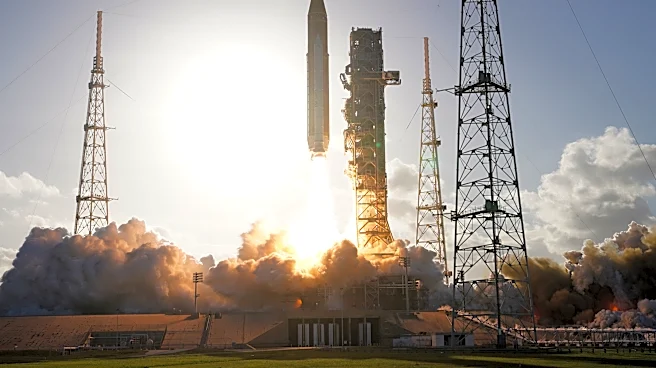
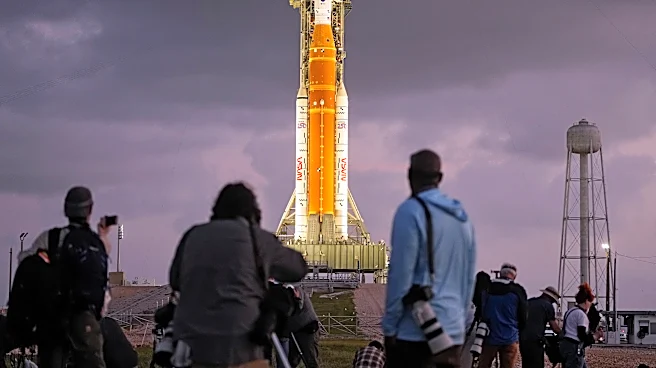
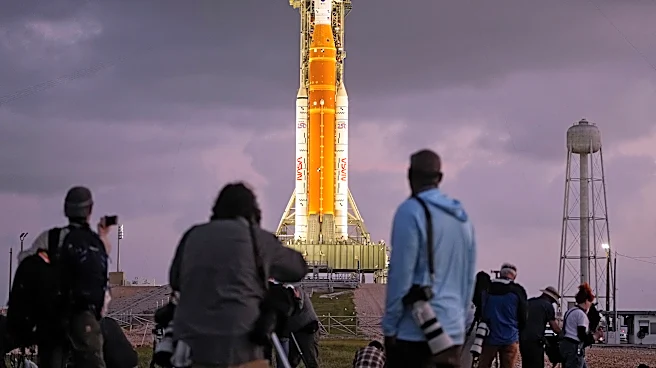
NASA's Artemis II mission has successfully launched, marking a significant milestone in lunar exploration. The Space Launch System rocket, carrying the Orion crew capsule, lifted off from Kennedy Space Center with four astronauts on board. Among them
are NASA astronauts Reid Wiseman, Christina Koch, and Victor Glover, along with Canadian Space Agency astronaut Jeremy Hansen. Koch and Glover are set to make history as the first woman and person of color to travel to the Moon, while Hansen is the first non-American to participate in such a mission. The 10-day mission includes a lunar flyby and various tests to prepare for future missions.
Why It's Important?
The Artemis II mission is a crucial step in NASA's broader Artemis program, which aims to establish a sustainable human presence on the Moon. This mission not only demonstrates international collaboration in space exploration but also sets the stage for future lunar missions, including the eventual establishment of a Moon base. The success of Artemis II could lead to advancements in space technology and inspire further investment in space exploration. It also represents a significant achievement in diversifying the field of space exploration, with a more inclusive group of astronauts participating in the mission.
What's Next?
Following the Artemis II mission, NASA plans to continue its lunar exploration efforts with subsequent missions. The next mission will test Orion's docking capabilities with lunar landers, and Artemis IV is scheduled to put humans back on the Moon by 2028. NASA aims to establish a Moon base by 2029, with robotic rovers and landers conducting much of the initial setup. These efforts are part of a long-term strategy to explore the Moon's surface and utilize its resources, potentially paving the way for future Mars missions.