





What's Happening?
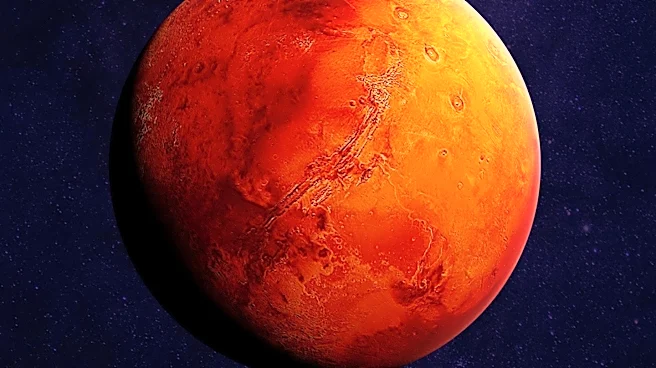
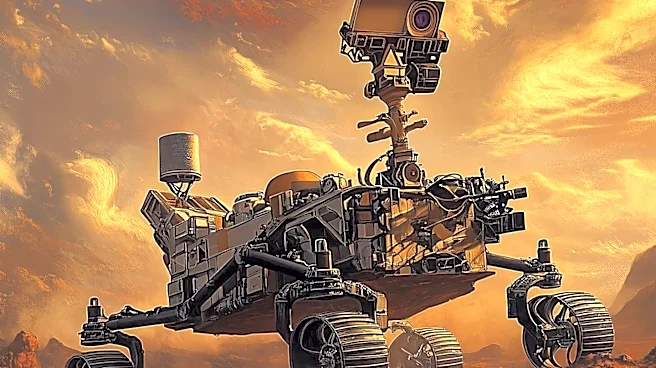
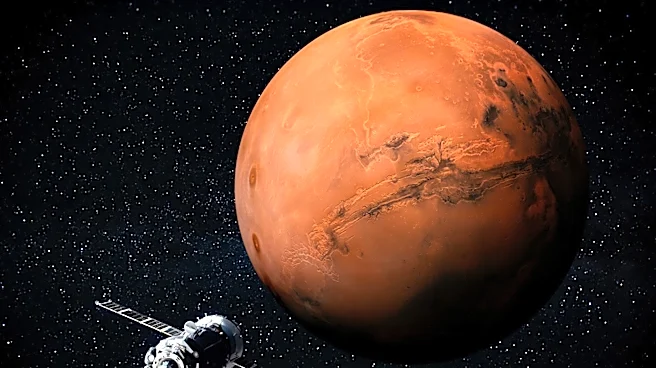
In 2018, a massive dust storm on Mars enveloped the entire planet, leading to the end of NASA's Opportunity rover mission. The storm began as a regional disturbance on May 30, 2018, and quickly expanded, covering an area larger than North America within
a week. By June 12, it had spread across a quarter of the planet, and by June 19, it was declared a planet-encircling event. The storm's intensity blocked sunlight for months, draining the solar panels of the Opportunity rover, which was parked in Perseverance Valley. The rover's last transmission was on June 10, 2018, after which it went silent due to insufficient power. The storm highlighted the challenges faced by solar-powered robots in the harsh Martian environment.
Why It's Important?
The 2018 dust storm on Mars underscores the vulnerability of solar-powered exploration missions in extraterrestrial environments. The Opportunity rover, initially designed for a 90-day mission, exceeded expectations by operating for over 14 years. Its demise due to the dust storm illustrates the limitations of relying on solar energy in environments with unpredictable weather patterns. This event has significant implications for future Mars missions, emphasizing the need for alternative power sources, such as nuclear energy, which powered the Curiosity rover and allowed it to continue operations during the storm. The storm also provided valuable data for atmospheric scientists, offering insights into Martian weather patterns and the planet's water loss mechanisms.
What's Next?
Following the Opportunity rover's mission conclusion, NASA and other space agencies are likely to focus on developing more resilient technologies for future Mars missions. This includes designing rovers and landers that do not rely solely on solar power, thereby mitigating the risk posed by dust storms. Additionally, the data collected during the 2018 storm will aid in improving weather prediction models for Mars, potentially allowing for better preparation and response strategies for future missions. The insights gained may also contribute to understanding Mars' climate history and its implications for past water presence on the planet.
Beyond the Headlines
The Opportunity rover's mission and its end due to the 2018 dust storm highlight the broader challenges of space exploration, particularly the need for sustainable and reliable power sources in harsh environments. The event also raises questions about the long-term sustainability of solar power in space missions and the importance of diversifying energy sources. Furthermore, the storm's impact on Mars' atmosphere and water loss provides a glimpse into the planet's climatic evolution, offering clues about its potential to support life in the past. These findings could influence future exploration strategies and the search for life beyond Earth.