







What's Happening?
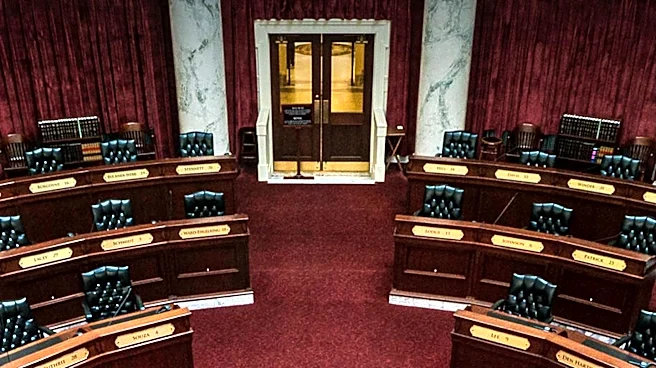
The Senate Agriculture Committee failed to advance the Agricultural Act of 2026 due to a deadlock over proposed changes to the Supplemental Nutrition Assistance Program (SNAP). The committee's 10-11 vote reflects deep partisan divides, particularly concerning
state cost-sharing metrics for SNAP benefits. Under the One Big Beautiful Bill Act, states with SNAP payment error rates above 6% are required to contribute to benefit costs starting October 2027. The USDA reported a national error rate of 10.62% for fiscal year 2025, with 41 states and Washington, D.C., exceeding the 6% threshold. Republicans, led by Chairman John Boozman, proposed structural changes to shift some SNAP costs to states, but Democrats opposed these measures, seeking a two-year delay instead of the proposed one-year. The failure to pass the bill sends it into limbo as Congress heads into recess.
Why It's Important?
The failure to advance the farm bill has significant implications for U.S. agriculture and food assistance programs. The deadlock over SNAP funding highlights ongoing tensions between fiscal accountability and social welfare. If unresolved, the impasse could disrupt agricultural support and food assistance programs, affecting millions of Americans who rely on SNAP. The proposed cost-sharing measures could impose financial burdens on states with high error rates, potentially leading to reduced benefits or increased state taxes. The outcome of these negotiations will influence future federal and state responsibilities in managing SNAP, impacting both beneficiaries and state budgets.
What's Next?
With the current farm bill set to expire on September 30, 2026, lawmakers face a tight deadline to resolve the SNAP funding dispute. When Congress reconvenes, they must either reach a consensus on the cost-sharing provisions or pass a temporary extension to maintain agricultural and food assistance programs. The committee's indefinite recess allows for further negotiations without restarting the amendment process. Stakeholders, including state governments and SNAP recipients, will be closely monitoring developments, as the outcome will affect funding and program administration.