



What's Happening?
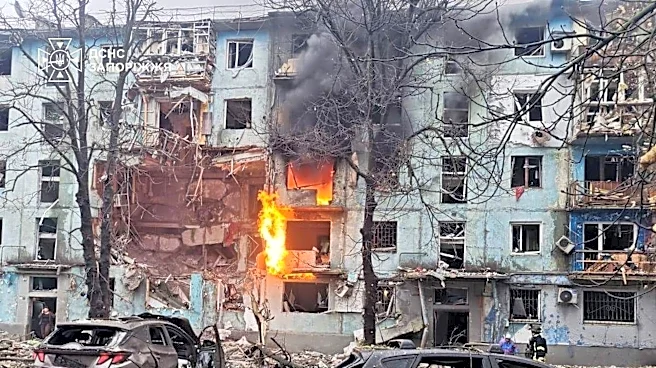
Hundreds of civilians evacuated from the Russian-occupied town of Oleshky in Ukraine's southern Kherson region are now receiving medical care and hot meals in Kyiv hospitals. These evacuations occurred in late October under a brief ceasefire. The World
Food Programme (WFP) and its Ukrainian partner, Iskra Dobra, were the first humanitarian responders to provide food upon the evacuees' arrival. Many evacuees, like Olha and Valentyna, endured severe food scarcity and harsh living conditions for years in the war zone. Olha recounted how neighbors resorted to eating pigeons, and a kilo of flour could cost up to $12, with food deliveries ceasing entirely in May. Valentyna described making soup from wild plants due to the lack of bread and flour. These individuals had been cut off from humanitarian assistance since Oleshky was occupied in February 2022, facing searches, interrogations, and threats.
Why It's Important?
This event highlights the severe humanitarian crisis in Russian-occupied territories of Ukraine and the critical role of international aid organizations in providing relief. The stories of evacuees underscore the devastating impact of conflict on civilian populations, particularly regarding food security and basic necessities. The WFP's immediate response demonstrates the importance of rapid humanitarian intervention during ceasefires to address urgent needs. The long-term psychological and physical toll on these individuals, who have lived in fear and deprivation for years, will require sustained support. This situation also brings attention to the challenges of delivering aid to conflict zones and the necessity of establishing safe corridors for humanitarian access.
What's Next?
The future for these evacuees remains uncertain, as they cannot return to their damaged homes. They will continue to receive medical check-ups and treatment in Kyiv hospitals. Humanitarian organizations like WFP will likely continue their efforts to provide emergency food and cash assistance to vulnerable populations in frontline communities across Ukraine. Since Russia's full-scale invasion in February 2022, WFP has provided the equivalent of 4.1 billion meals to Ukraine's most vulnerable people, reaching 357,000 individuals monthly in frontline areas and providing daily school meals to 200,000 students. The ongoing need for such assistance suggests that these programs will be crucial for the foreseeable future, especially as more civilians may be evacuated from occupied territories.
Beyond the Headlines
The experiences of evacuees from Oleshky reveal the profound human cost of prolonged conflict, extending beyond immediate casualties to encompass chronic hunger, psychological trauma, and the destruction of community life. The reliance on wild plants for sustenance and the extreme scarcity of basic food items illustrate a breakdown of societal structures and supply chains under occupation. The emotional relief expressed by evacuees upon receiving a hot meal and feeling safe underscores the fundamental human need for security and nourishment. This situation also raises questions about accountability for the conditions imposed on civilians in occupied territories and the international community's responsibility to ensure humanitarian access and protection for those trapped in conflict zones.