







What's Happening?
A recent University of New Hampshire Survey Center poll indicates a shift in the early Republican race for the 2028 presidential nomination. Secretary of State Marco Rubio has made significant gains, reducing Vice President JD Vance's previously commanding
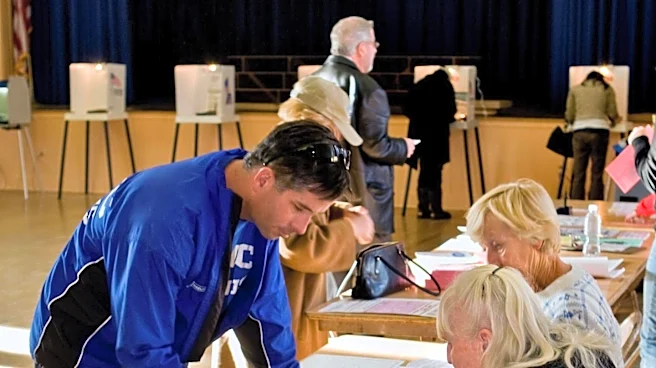
lead. The poll shows Vance leading with 36% of the potential vote, while Rubio has surged to 26%. This marks a notable change from earlier polls where Vance held a double-digit advantage. The poll surveyed 579 likely Republican primary voters in New Hampshire, with a margin of error of 4.1%. Rubio's rise is attributed to his growing national profile and his role in the Trump administration, which appears to resonate with voters in New Hampshire. Political analysts suggest that Rubio's surge could lead to a more competitive Republican primary if both candidates decide to run.
Why It's Important?
The poll results highlight a potential shift in the Republican landscape as the 2028 presidential race begins to take shape. Rubio's increasing support suggests that Republican voters may be looking for alternatives to candidates closely aligned with President Trump, like JD Vance. This could indicate a broader trend within the party towards candidates perceived as more moderate or strategic for the general election. The outcome of this early polling could influence campaign strategies and voter engagement efforts as candidates seek to solidify their positions. Additionally, the poll underscores the importance of early-state primaries in shaping the national narrative and momentum for presidential hopefuls.
What's Next?
As the 2028 presidential race continues to develop, both Rubio and Vance will likely intensify their efforts to secure support among Republican voters. Rubio's recent gains may prompt him to increase his visibility and campaign activities in key states. Meanwhile, Vance may need to reassess his strategy to maintain his lead. The evolving dynamics of the Republican primary could also impact other potential candidates, influencing their decisions to enter the race. Observers will be watching closely to see how these early poll results affect the broader field of candidates and the strategies they employ moving forward.