







What's Happening?
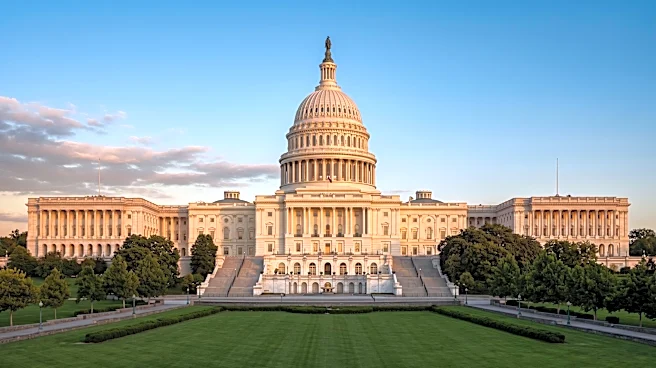
The U.S. House of Representatives has passed the Water Resources Development Act (WRDA), which incorporates language introduced by Representative Ilhan Omar (D-MN). This specific language aims to safeguard the future of the Upper St. Anthony Falls Lock
and clarify the ownership and maintenance responsibilities for a critical piece of infrastructure beneath the Mississippi River in Minneapolis. The legislation grants authority to the U.S. Army Corps of Engineers (Corps) to undertake water resources development projects and studies, focusing on improvements to the nation's ports, inland waterways, locks, dams, flood protection, ecosystem restoration, and other water resources infrastructure. Representative Omar expressed her satisfaction, noting that this passage addresses long-standing concerns from the City of Minneapolis, Hennepin County, and the State of Minnesota regarding the stability of the river at the heart of the Twin Cities. The inclusion of her language is seen as a step towards protecting a historic segment of the Mississippi waterfront and ensuring its safety for future generations.
Why It's Important?
This legislative action is important for several reasons, particularly for the Minneapolis area and broader U.S. infrastructure policy. The language clarifies the ownership of a cutoff wall constructed by the Corps in the 1870s, which was built on an emergency basis to stabilize the Mississippi Riverbed after a collapse at St. Anthony Falls. For decades, questions about who was responsible for the maintenance and evaluation of this vital infrastructure have persisted among local and state governments. By explicitly assigning ownership and responsibility to the Corps, the bill removes ambiguity and ensures that necessary maintenance and evaluation can proceed, preventing potential future environmental and structural issues. This also sets a precedent for addressing similar long-standing infrastructure concerns across the nation, where historical projects may have unclear ownership or maintenance mandates. The stability of the Mississippi River is crucial for the ecological health of the region, local economies reliant on the river, and the safety of communities along its banks.
What's Next?
Following its passage in the U.S. House of Representatives, the Water Resources Development Act, including Representative Omar's language, will proceed through the legislative process, likely moving to the Senate for consideration. If passed by the Senate and signed into law, the U.S. Army Corps of Engineers will officially assume responsibility for the cutoff wall beneath the Mississippi River. This will necessitate the Corps developing and implementing a plan for the ongoing maintenance and evaluation of the structure. Local and state governments in Minnesota, including the City of Minneapolis and Hennepin County, will likely work in conjunction with the Corps to ensure the effective execution of these responsibilities. The clarification of ownership is expected to lead to a more stable and predictable management of this critical river infrastructure, potentially paving the way for further environmental and infrastructure projects in the region.
Beyond the Headlines
The resolution of the cutoff wall's ownership highlights a broader challenge in infrastructure management across the United States: the legacy of historical projects with ambiguous long-term responsibilities. Many older infrastructure components, built decades or even centuries ago, may lack clear mandates for ongoing maintenance, leading to deferred upkeep and potential risks. This situation underscores the need for comprehensive audits and legislative clarity regarding the ownership and maintenance of critical infrastructure, particularly in environmentally sensitive areas like major river systems. The successful inclusion of Representative Omar's language demonstrates the effectiveness of local advocacy in addressing specific, yet significant, infrastructure issues at the federal level. It also emphasizes the interconnectedness of environmental protection, historical preservation, and urban development, as the stability of the Mississippi River directly impacts the Twin Cities' ecological health and economic vitality.