










What's Happening?
A recent study published in Nature Sustainability by Arianna Salazar-Miranda from the Yale School of the Environment examines how suburban design contributes to social isolation in America. The research focuses on the 'garden city' design, characterized
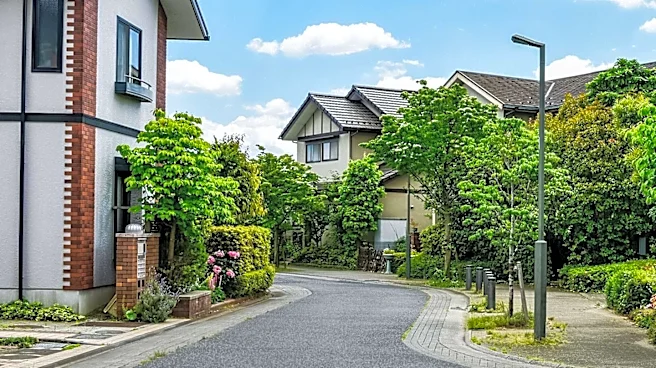
by winding streets and cul-de-sacs, which became prevalent in 20th-century American suburbs. Salazar-Miranda's study analyzed over 60,000 neighborhoods, assessing the impact of street layouts on greenhouse gas emissions, sedentary behavior, and social isolation. The findings suggest that the design of these neighborhoods significantly contributes to social isolation, accounting for up to 40% of the isolation typically associated with suburban living. The study uses anonymized smartphone movement data to measure social interactions, highlighting that certain suburban layouts reduce the frequency of unplanned encounters, which are crucial for forming social ties.
Why It's Important?
This study sheds light on the broader implications of urban planning and its impact on social dynamics in the U.S. By identifying suburban design as a significant factor in social isolation, the research challenges the notion that loneliness is solely a personal issue. It suggests that the physical environment plays a crucial role in shaping social interactions, which can influence community cohesion and individual well-being. The findings have potential implications for urban planners and policymakers, emphasizing the need to consider social connectivity in neighborhood designs. This could lead to changes in how future suburbs are planned, potentially fostering environments that encourage more social interaction and reduce feelings of isolation among residents.
What's Next?
The study's findings may prompt urban planners and policymakers to reevaluate current suburban designs and consider modifications that promote social interaction. This could involve redesigning neighborhoods to include more communal spaces and pedestrian-friendly pathways that encourage residents to engage with one another. Additionally, the research may influence future housing developments, with a focus on creating environments that facilitate social connections. As awareness of the impact of design on social isolation grows, there may be increased advocacy for policies that prioritize community-building in urban planning.
Beyond the Headlines
The implications of this study extend beyond urban planning, touching on cultural and societal norms regarding community and social interaction. It challenges the traditional view of suburban living as inherently isolating and highlights the potential for design to foster community engagement. This perspective could lead to a broader discussion about the role of physical space in shaping social behavior and the importance of designing environments that support mental health and well-being. The study also raises questions about the balance between privacy and community in suburban settings, potentially influencing future residential preferences and lifestyle choices.