






What's Happening?
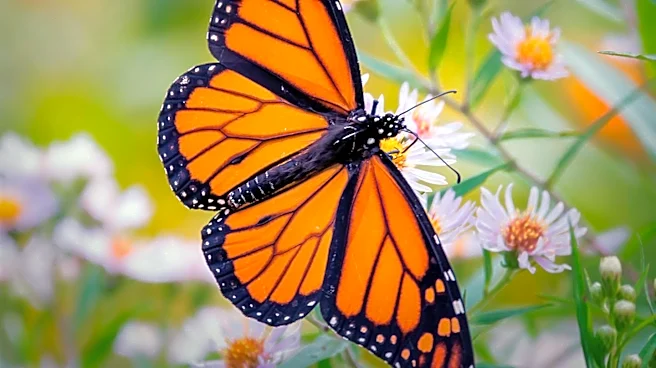
Monarch butterflies are utilizing Gibbs Gardens in Cherokee County, Georgia, as a vital refueling stop during their annual 3,000-mile migration from Canada and the northern United States to central Mexico. The gardens, particularly a sprawling meadow
of cosmos, zinnias, and other wildflowers, provide essential nectar sources for the butterflies. According to Eric Johnson, a horticulturist and host of PBS's GardenSmart, monarchs need to refuel daily, and the availability of nectar sources is crucial for their survival during this arduous journey. The 376-acre estate, developed by landscape designer Jim Gibbs, repurposed a significant portion of its gardens in 2021 to focus on supporting the monarch population, especially as their numbers were collapsing. This initiative provides a critical resource for the eastern migratory monarch population, which has seen an estimated 80% decline since the mid-1990s.
Why It's Important?
The establishment of vital stopover points like Gibbs Gardens is crucial for the conservation of monarch butterflies, a species facing significant threats. The eastern migratory monarch population's drastic decline, attributed to habitat loss, pesticide exposure, and climate change, highlights the urgent need for human intervention and conservation efforts. These gardens not only offer nectar for adult butterflies but also emphasize the importance of milkweed plants, which are essential for monarch reproduction as caterpillars feed exclusively on their leaves. The disappearance of native milkweed habitats has severely impacted breeding grounds, making even small-scale planting decisions by homeowners significant. The success of initiatives like Gibbs Gardens demonstrates how cultivated landscapes can play a critical role in supporting biodiversity and mitigating the effects of environmental degradation on migratory species.
What's Next?
The ongoing efforts at Gibbs Gardens and similar initiatives will continue to provide crucial support for monarch butterflies during their migration. Homeowners and gardeners are encouraged to plant native milkweed varieties and nectar-producing flowers to create additional stopover and breeding habitats. This decentralized approach to conservation, emphasizing individual contributions, can collectively strengthen the monarch population's resilience. Continued monitoring of monarch populations and migration patterns will be essential to assess the effectiveness of these conservation strategies. Furthermore, public awareness campaigns about the importance of monarch conservation and the role of specific plants like milkweed could lead to broader community involvement and the creation of more butterfly-friendly environments across the migration path.
Beyond the Headlines
The story of the monarch butterfly migration and the efforts at Gibbs Gardens underscores a broader ecological challenge: the impact of human activity on migratory species and the delicate balance of ecosystems. The decline of monarch populations serves as a visible indicator of wider environmental issues, including habitat fragmentation and the widespread use of pesticides. This situation highlights the interconnectedness of natural systems and the potential for localized conservation efforts to have far-reaching impacts. It also raises ethical considerations about humanity's responsibility to protect biodiversity and maintain ecological health. The shift towards repurposing ornamental gardens for conservation purposes reflects a growing understanding that human-designed spaces can and should contribute to ecological sustainability, moving beyond purely aesthetic functions to serve vital environmental roles.