






What's Happening?
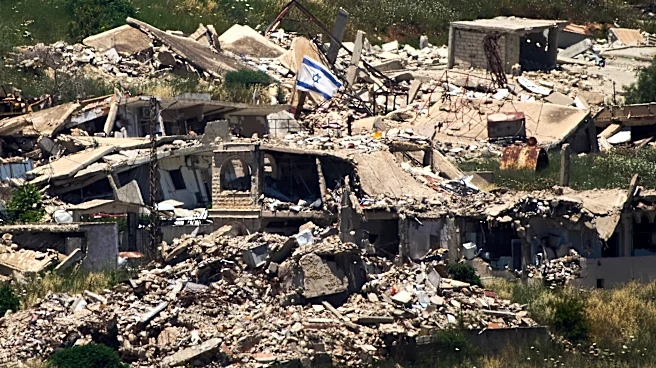
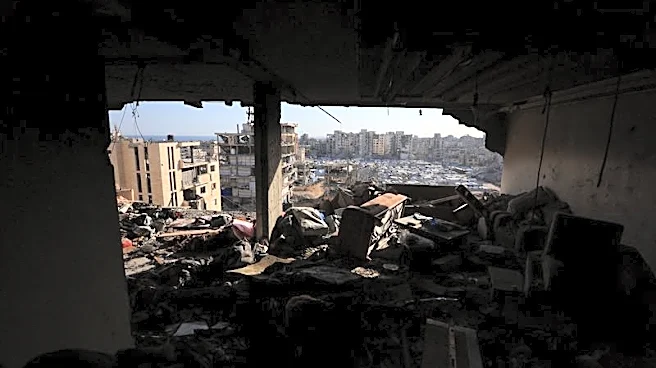
Israeli airstrikes on southern Lebanon have resulted in the deaths of nine individuals, including three members of the Lebanese military. This incident occurred shortly after a ceasefire agreement was reached between Israel and Lebanon. The Lebanese President,
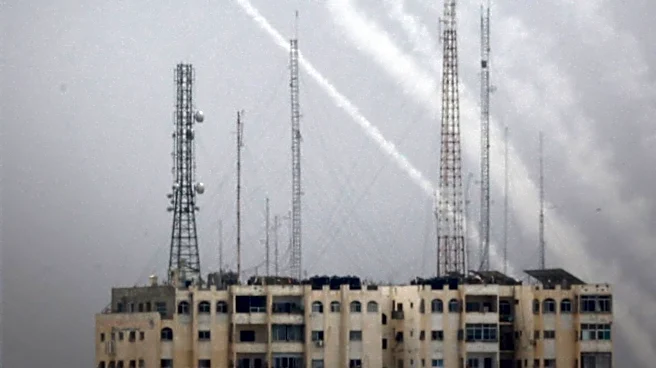
Joseph Aoun, condemned the strikes as a violation of Lebanon's sovereignty and international law. The Israeli military justified the airstrikes by claiming they targeted a vehicle moving suspiciously towards Israeli soldiers, suspecting involvement with Hezbollah. The conflict has escalated since March, with significant casualties and displacement in Lebanon.
Why It's Important?
The airstrikes highlight ongoing tensions in the Middle East, particularly between Israel and Hezbollah, which could destabilize the region further. The conflict has already resulted in significant loss of life and displacement, affecting regional security and international relations. The involvement of major powers like the U.S. and Iran adds complexity, as their diplomatic maneuvers could influence the conflict's trajectory. The situation underscores the fragile nature of ceasefire agreements in volatile regions and the potential for broader geopolitical implications.
What's Next?
The continuation of hostilities could lead to further international diplomatic efforts to stabilize the region. The Lebanese government may seek additional support from international bodies to address the violations of its sovereignty. Meanwhile, Israel's military actions and Hezbollah's responses will likely remain focal points in regional security discussions. The U.S. and Iran's roles in mediating or exacerbating tensions will be closely monitored, as their involvement could either facilitate peace or prolong conflict.