






What's Happening?
The highly classified internal communications network utilized by the U.S. National Security Agency (NSA) experienced an outage on Tuesday, as reported by U.S. media. This network is crucial for NSA employees to communicate classified information internally.
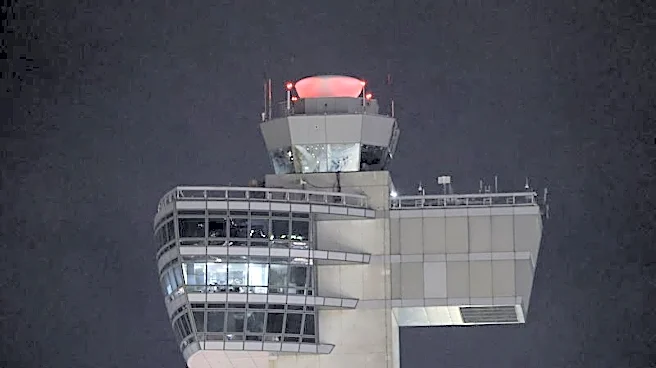
CNN, citing sources familiar with the situation, noted that there is currently no evidence suggesting a cyberattack caused the disruption. The New York Times further reported that the network is used for sending and receiving top-secret information, emphasizing that such a disruption would be a 'severe impediment.' Due to the outage, the agency instructed its employees to stagger their arrivals at its Maryland headquarters. This incident at the prominent intelligence agency is part of a series of significant technical disruptions recently affecting various U.S. organizations, including airlines and banks. Earlier, the Federal Aviation Administration issued a national ground stop due to communication failures, impacting nearly 20,000 flights. United Airlines also experienced a system outage, and several major U.S. banks faced difficulties with online account access following a technical issue at JPMorgan Chase.
Why It's Important?
The outage of the NSA's classified communications network is a critical event due to its direct impact on national security operations. The NSA is responsible for global monitoring, collection, and processing of information and data for foreign intelligence and counterintelligence purposes, making its internal communication systems vital for national defense and intelligence gathering. A disruption of this magnitude, even without evidence of a cyberattack, can create vulnerabilities, delay critical intelligence sharing, and potentially compromise operational effectiveness. The incident also highlights a broader concern about the resilience of critical U.S. infrastructure, given that it follows a series of technical failures across various sectors, including aviation and finance. This pattern of outages could erode public confidence in the reliability of essential services and systems, prompting calls for more robust cybersecurity and infrastructure maintenance protocols across government agencies and private industries.
What's Next?
The immediate priority for the NSA will be to fully restore its classified communications network and conduct a thorough investigation into the cause of the outage. This investigation will aim to identify whether the disruption was due to a technical malfunction, human error, or an as-yet-undetected external factor. Following the restoration, the agency will likely review its protocols for system resilience and contingency planning to prevent future occurrences and minimize impact. Given the recent string of outages across different sectors, there may be increased scrutiny from Congress and other oversight bodies regarding the state of U.S. critical infrastructure and cybersecurity defenses. This could lead to calls for new legislation, increased funding for infrastructure upgrades, or enhanced inter-agency coordination on cybersecurity threats and incident response.
Beyond the Headlines
The disruption of the NSA's classified network, even if not a cyberattack, underscores the inherent fragility of complex technological systems that underpin national security. In an era of increasing digital reliance, any systemic failure, regardless of its origin, can have profound implications for intelligence operations, defense capabilities, and international relations. This event could prompt a deeper re-evaluation of redundancy measures and the diversification of communication channels within critical government agencies. Furthermore, the timing of this outage amidst other widespread technical disruptions across the U.S. may fuel public anxiety about the nation's overall technological resilience and its preparedness for large-scale infrastructure failures, whether accidental or malicious. It also highlights the ongoing challenge of maintaining cutting-edge, secure, and reliable systems in the face of evolving threats and technological complexities.