







What's Happening?
Japan is facing challenges in replacing liquefied natural gas (LNG) supplies lost due to disruptions in the Strait of Hormuz. Despite a policy shift to increase coal use, Japan's utilities are unable to import enough coal to compensate for the LNG shortfall.
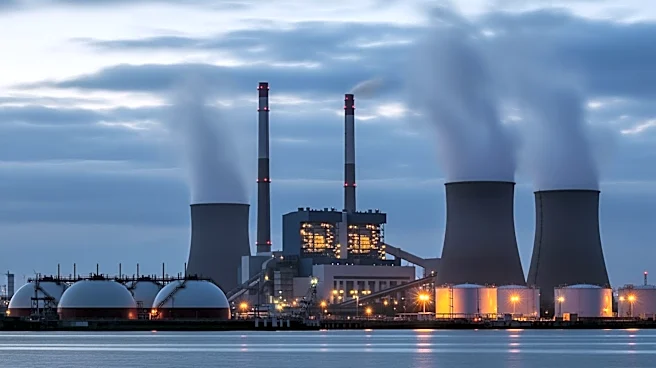
The International Energy Agency reports that the closure of the strait, amid the US-Israel conflict with Iran, has removed nearly 20% of global LNG supply. Japan, heavily reliant on these shipments, has eased restrictions on coal plant use but still faces significant supply risks. The Ministry of Economy, Trade, and Industry has temporarily lifted caps on coal plant operations, but this offers limited relief.
Why It's Important?
The disruption in LNG supply highlights Japan's vulnerability in energy security and its reliance on imports through strategic maritime routes. The situation underscores the need for Japan to diversify its energy sources and enhance resilience against geopolitical risks. The shift to coal, while a short-term solution, raises environmental concerns and may conflict with Japan's long-term climate goals. The energy supply challenges could also impact Japan's economic stability and its ability to meet domestic energy demands.
What's Next?
Japan may need to explore alternative energy sources and strengthen regional cooperation to secure stable energy supplies. The government might consider investing in renewable energy and infrastructure to reduce dependency on fossil fuels. As the situation in the Strait of Hormuz evolves, Japan's energy policies will likely adapt to ensure national security and economic stability. The international community will be watching closely, as Japan's actions could influence global energy markets and environmental policies.