







What's Happening?
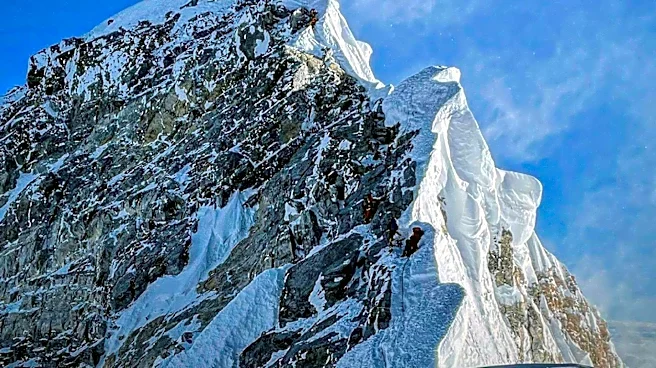
An ill-fated British expedition to conquer Mount Everest in 1924 encountered significant delays and unsettling premonitions, as detailed in historical accounts. The team, which included mountaineers George Mallory and Andrew 'Sandy' Irvine, was trapped
at base camp in May due to severe weather, making their original summit schedule untenable. Before their ascent, the entire expedition party sought a blessing from the Holy Lama at Rongbuk Monastery. During this audience, the Lama offered a mix of encouragement and a stark warning, stating that 'Great Chomolungma, the Goddess Mother, is guarded by the spirits' and that turning back would 'bring pleasure to the demons.' One porter, Ang Tsering, later recalled the Lama's words as a direct warning of impending disaster if they were to 'defile the holy mountain.' Further unsettling the team was an 'extraordinary picture' at the monastery depicting the 'angered Deity of the Mountain' with demons and a 'naked body of the white man who dared to violate the icebound, tempest-guarded sanctuary.' These events contributed to a sense of foreboding among some members of the expedition.
Why It's Important?
This historical account highlights the profound cultural and spiritual significance of Mount Everest to local communities, contrasting with the Western ambition to conquer its peak. The 'bad omens' and the Lama's warnings underscore the clash between indigenous beliefs and the motivations of early European mountaineers. This narrative is important for understanding the human element in extreme exploration, where psychological factors and cultural interpretations of natural phenomena can significantly influence morale and decision-making. The story also serves as a poignant reminder of the inherent dangers and unpredictable nature of high-altitude mountaineering, particularly in an era with less advanced equipment and meteorological understanding. The eventual disappearance of Mallory and Irvine adds a tragic dimension, making the earlier premonitions seem eerily prescient and contributing to the enduring mystique of Everest.
What's Next?
While the 1924 expedition concluded with the disappearance of Mallory and Irvine, the legacy of their attempt and the 'bad omens' continues to resonate in mountaineering history. Future expeditions to Everest, though now equipped with modern technology and greater understanding of the mountain, still contend with its formidable challenges and the respect it commands. The story serves as a cautionary tale, influencing how climbers approach the mountain, often with increased awareness of its dangers and the need for meticulous planning. The mystery surrounding Mallory and Irvine's final moments continues to fuel historical research and speculation, with ongoing efforts to uncover more details about their fate. The cultural significance of Chomolungma (Mount Everest) for the local Sherpa people remains a vital aspect of any interaction with the mountain, emphasizing the need for cultural sensitivity in future endeavors.
Beyond the Headlines
The narrative of the 1924 Everest expedition delves into deeper themes beyond mere adventure, touching upon the psychological impact of extreme environments and the power of belief systems. The 'bad omens' and the Lama's prophecy illustrate how cultural narratives and spiritual warnings can shape perceptions of risk and destiny. This historical event also highlights the early stages of human interaction with the world's highest peaks, revealing a period when scientific exploration was often intertwined with a sense of the mystical and unknown. The story implicitly raises questions about the ethics of conquering sacred natural sites and the potential consequences of disregarding local wisdom. It underscores the enduring human fascination with pushing boundaries, even in the face of overwhelming odds and perceived supernatural warnings, contributing to the rich tapestry of mountaineering lore and the complex relationship between humanity and nature.