


What's Happening?
Pakistan's Defence Minister Khawaja Muhammad Asif announced an 'open war' with Afghanistan following a series of cross-border strikes between the two nations. The conflict escalated after Pakistan accused the Afghan Taliban of harboring militants responsible
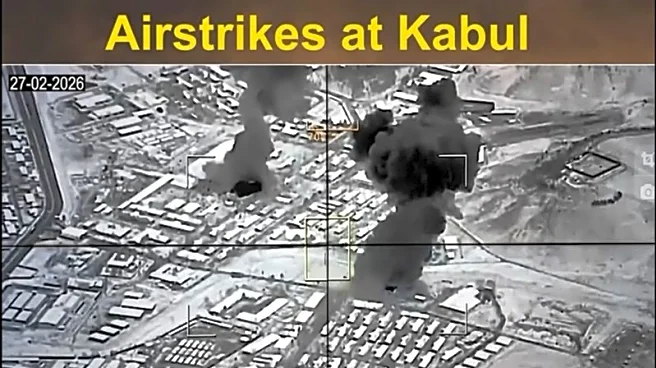
for attacks within Pakistan. In response, Pakistan conducted air strikes targeting Taliban military installations in Afghanistan, including in Kabul and Kandahar. The Afghan Taliban denied these allegations and accused Pakistan of unprovoked attacks, claiming civilian casualties. Diplomatic efforts are underway to de-escalate the situation, with international calls for dialogue to prevent further conflict.
Why It's Important?
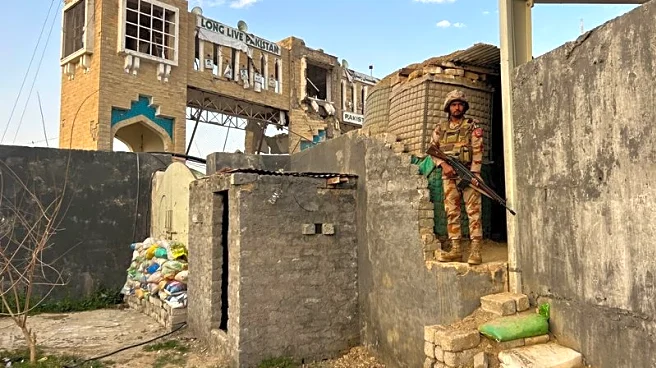
The escalation of conflict between Pakistan and Afghanistan has significant implications for regional stability and international relations. The ongoing tensions could disrupt trade and economic activities, particularly with the closure of major border crossings. The conflict also poses a threat to civilian safety and could lead to a humanitarian crisis if not resolved. Additionally, the involvement of international stakeholders, such as the United States, highlights the global interest in maintaining peace in the region. The situation underscores the challenges of counterterrorism efforts and the complexities of geopolitical alliances.
What's Next?
The immediate focus is on diplomatic efforts to de-escalate the conflict and reopen border crossings to resume trade. International organizations and neighboring countries are likely to increase pressure on both Pakistan and Afghanistan to engage in dialogue. The United Nations and other international bodies may play a role in mediating the conflict to prevent further violence. The situation remains volatile, and any further military actions could exacerbate tensions, potentially drawing in other regional powers and complicating international relations.
Beyond the Headlines
The conflict between Pakistan and Afghanistan highlights the long-standing issues of border security and the influence of militant groups in the region. The situation raises questions about the effectiveness of international counterterrorism strategies and the role of regional powers in maintaining stability. The conflict also reflects the broader geopolitical dynamics, including the influence of major powers like the United States and China in South Asia. The outcome of this conflict could have long-term implications for regional alliances and the balance of power in the area.