

What's Happening?
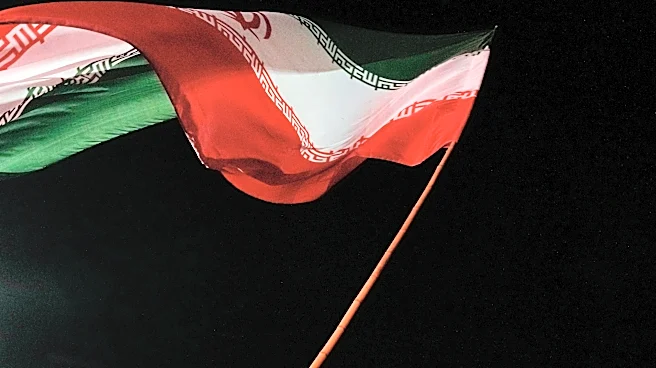
The Iranian Parliament has approved the general principles of a bill titled 'Plan to Counter the Infiltration of Intelligence Services and Foreign Governments or Institutions.' The vote, with 183 in favor, four against, and five abstentions, signifies
an initial parliamentary endorsement, though individual articles and penalties are yet to be finalized. The proposed legislation, which contains 19 articles in its publicly available version, aims to significantly restrict interactions between Iranians and foreign individuals or institutions. Majid Ansari, President Masoud Pezeshkian's vice president for legal affairs, stated the government's formal opposition to the proposal, citing fundamental problems and conflicts with constitutional principles regarding citizens' rights, fundamental freedoms, and even Sharia law. The government argues that existing laws and security agencies are sufficient to address foreign intelligence activities and that new legislation, if necessary, should be developed collaboratively with government and judiciary input.
Why It's Important?
This legislative development is significant as it could severely curtail academic, scientific, and media exchanges between Iran and the international community. The government's opposition highlights a potential internal conflict within the Iranian political structure regarding the extent of control over foreign interactions. If enacted in its current form, the bill could lead to a brain drain, as specialists might choose to leave Iran to pursue their scientific and research activities in more open environments, as warned by Ansari. The proposed restrictions on providing information to foreign entities, including media, and the criminalization of certain cultural activities under foreign direction, could further isolate Iran and limit its engagement with global discourse. The bill's broad and vague wording, as criticized by legal scholar Mohsen Borhani, raises concerns about potential selective enforcement and the suppression of academic freedom, political activism, and artistic expression, impacting the country's intellectual and social landscape.
What's Next?
Following the approval of its general principles, the Iranian Parliament will proceed to consider the individual articles and penalties of the 'Plan to Counter the Infiltration of Intelligence Services and Foreign Governments or Institutions.' The government, through Vice President Ansari, has urged parliament to either remove the proposal from its agenda or subject it to a more detailed two-stage review, emphasizing the need for judiciary input due to its broad criminal provisions. Lawmakers, such as Mohammad Saleh Jokar, have acknowledged that the details are not yet finalized and require careful consideration. The debate over the bill's specific clauses and their potential impact on various sectors, including academia, media, and civil society, is expected to continue. Public and social media reactions indicate significant concern among some Iranians about the potential for increased isolation and restrictions on fundamental freedoms, suggesting ongoing scrutiny and potential amendments to the draft.
Beyond the Headlines
The proposed legislation reflects a deeper struggle within Iran over national security priorities versus individual freedoms and international engagement. The bill's emphasis on countering 'infiltration' suggests a heightened sense of vulnerability and a desire to exert greater control over external influences, potentially stemming from perceived threats or past conflicts, as alluded to by lawmaker Mohammad Saleh Jokar. The broad scope of the draft, extending beyond traditional espionage to encompass academic and cultural exchanges, indicates a move towards a more insular society. This could have long-term implications for Iran's scientific advancement, cultural development, and its ability to attract and retain talent. The criticism from legal scholars and social media users underscores concerns about the erosion of civil liberties and the potential for the bill to be used to suppress dissent or limit legitimate international cooperation, further shaping Iran's trajectory on the global stage.