
What's Happening?
Ukraine and the European Union are collaborating to finalize an emergency winter aid package, as announced by Prime Minister Serhiy Koretsky. The package is designed to counter Russian attacks on critical
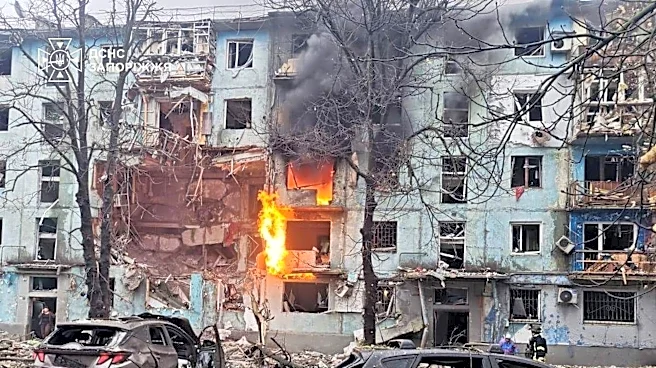
infrastructure, which have left hundreds of thousands without electricity. Key items in the aid include generators, charging stations, buses, and assistance for maintaining transport links across the Dnipro River. Koretsky is scheduled to discuss the specifics of this package with European Commission President Ursula von der Leyen in Brussels on November 16. The objective is to expedite the decision-making process and ensure the swift delivery of aid to Ukrainian cities like Kyiv, Dnipro, Zaporizhzhia, Kharkiv, and Odesa, which have been targeted by Russian forces. Recent Russian strikes on power transmission lines and substations in the Zaporizhzhia and Dnipropetrovsk regions on Sunday underscore the urgent need for this assistance.
Why It's Important?
This emergency aid package is crucial for Ukraine's resilience during the winter months, directly addressing the humanitarian crisis exacerbated by ongoing Russian aggression. The provision of generators and charging stations will help maintain essential services and provide warmth to civilians in areas affected by power outages, potentially saving lives and mitigating suffering. The assistance with transport links is vital for logistics, allowing for the movement of supplies, emergency personnel, and potentially displaced populations. For the EU, this initiative reinforces its commitment to supporting Ukraine's sovereignty and stability, aligning with broader geopolitical objectives to counter Russian influence. The collaboration also highlights the strategic importance of international partnerships in responding to humanitarian crises in conflict zones, demonstrating a united front against actions that violate international norms and human rights.
What's Next?
Prime Minister Koretsky's meeting with European Commission President Ursula von der Leyen on November 16 will be a critical step in finalizing the aid package. Following this, the focus will shift to the logistical challenges of delivering the aid to Ukraine, particularly to the most affected regions. The speed and efficiency of these deliveries will be paramount, given the approaching winter and the continued threat of Russian strikes. The EU and Ukraine will likely work on establishing secure humanitarian corridors and distribution networks to ensure the aid reaches those in need without delay. This initiative may also set a precedent for future emergency responses and strengthen the framework for international humanitarian assistance in conflict-affected areas.
Beyond the Headlines
The ongoing targeting of civilian infrastructure, particularly energy facilities, by Russian forces raises significant concerns regarding international humanitarian law and the protection of civilians in armed conflict. The need for an emergency winter aid package underscores the weaponization of winter conditions as a tactic of war, aiming to demoralize the population and undermine Ukraine's ability to resist. This situation highlights the broader ethical implications of modern warfare, where civilian populations bear a disproportionate burden. The international community's response, through initiatives like this aid package, reflects a commitment to upholding humanitarian principles and providing essential support in the face of such tactics, emphasizing the importance of solidarity and collective action in mitigating the human cost of conflict.