





What's Happening?
A large team of geneticists and neuroscientists, led by researchers at Rutgers University, has conducted a detailed genetic analysis revealing shared genetic roots among obsessive-compulsive disorder (OCD), chronic tic disorders (CTDs) like Tourette syndrome,
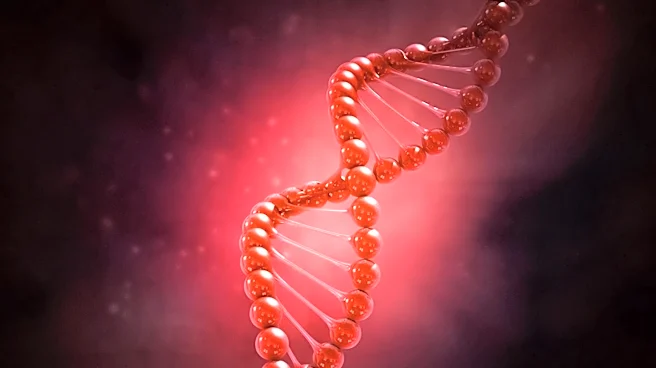
and autism. Published in Nature Neuroscience, the study analyzed exome data from nearly 4,000 individuals with OCD, CTD, or both, significantly expanding previous sample sizes. The research identified 36 genes that substantially increase the risk of developing one or both of these disorders, a tenfold increase from the previously known four 'high-confidence' genes. These conditions frequently co-occur, with 50% of individuals with CTDs also exhibiting obsessive-compulsive behaviors and up to 30% of OCD patients having a history of tics. By comparing human, rhesus macaque, and mouse brain maps, the researchers outlined a neural blueprint for these conditions, pinpointing dysfunction in the cortico-striato-thalamo-cortical circuit, which governs cognition, impulse control, movement, and data processing. Risk-associated genes showed increased expression in brain regions like the cortex, striatum, and thalamus, as well as the cerebellum, affecting essential functions like timing and balance.
Why It's Important?
This research marks a pivotal moment in understanding neurodevelopmental disorders, as it dramatically expands the catalog of shared risk genes for OCD, CTDs, and autism. Identifying 36 new high-effect genes provides a much clearer genetic picture of these complex conditions, which have historically been challenging to treat due to a limited understanding of their underlying biological pathologies. The discovery of shared genetic pathways and brain circuits involved in impulse control, movement, and habit formation suggests that these disorders may not be as distinct as previously thought, opening the door for more integrated diagnostic and therapeutic approaches. For patients and their families, this means a potential shift from symptom-based treatments to targeted therapies that address the specific genetic and neural dysfunctions. The magnitude of the identified genes' effects, increasing risk by an average of 57-fold and up to 210-fold, underscores their critical role and offers clear targets for pharmaceutical development, potentially leading to more effective and personalized treatments.
What's Next?
The identification of over 30 new genetic targets for OCD and CTDs is expected to catalyze significant advancements in treatment development. Pharmaceutical companies now have a much broader array of specific biological pathways to investigate for drug development, moving beyond the limited options previously available. Future research will likely focus on understanding the complex interactions within these gene networks, as the study emphasizes that these genes do not act individually but in concert. This network-based understanding could lead to the design of therapies that target entire pathways rather than single genes, potentially offering more comprehensive and effective interventions. The findings also strengthen the links between these disorders and other neurodevelopmental conditions like schizophrenia, suggesting that insights gained from this research could have broader implications for understanding and treating a range of neurological and psychiatric illnesses. The long-term commitment of families who provided DNA samples highlights the importance of continued data collection and collaborative research efforts to further unravel the complexities of these highly heritable disorders.
Beyond the Headlines
This research has profound implications beyond immediate treatment development, touching upon the very definition and classification of neurodevelopmental disorders. The discovery of substantial genetic overlap between OCD, CTDs, and autism challenges traditional diagnostic boundaries and may lead to a more unified understanding of these conditions as manifestations of shared underlying biological vulnerabilities. This shift could influence how these disorders are diagnosed, researched, and treated, fostering a more holistic approach to neurodevelopmental health. Ethically, the increased ability to identify genetic predispositions raises questions about genetic screening, counseling, and the potential for early intervention, which could have significant societal impacts. Furthermore, the study's reliance on extensive data from parent-child trios and singletons underscores the critical role of patient participation and long-term data collection in advancing medical science, highlighting the collaborative nature of modern genetic research and its potential to transform lives.