







What's Happening?
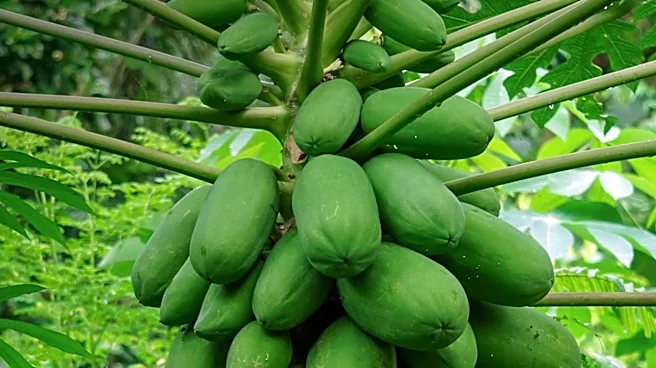
A late-April frost severely damaged pawpaw tree flowers across the region, leading to a significant shortage of the native fruit this season. This scarcity has impacted local farmers, farmers' markets, and culinary businesses, including Silver Spring
chef Alex Bilaro of Mmm Umai, who specializes in pawpaw-infused gelato, sorbets, and condiments. Many farmers who typically sell pawpaws at markets, such as the FreshFarm Silver Spring market and the Takoma Park Farmers Market, had limited or no supply this year. Some farmers, like Two Boots Farm, reported losing up to 75% of their pawpaw orchard. The frost also affected other fruit crops, including stone fruits and apples, leading the U.S. Department of Agriculture to approve a disaster declaration for Maryland farms in June, allowing them to apply for emergency loans.
Why It's Important?
The pawpaw shortage highlights the vulnerability of local agricultural economies to climate events and their ripple effects on small businesses and consumer markets. For farmers, a single late frost can devastate an entire season's crop, leading to significant financial losses and threatening their livelihoods. Local chefs and food businesses that rely on seasonal, native ingredients face challenges in sourcing and maintaining their unique product lines, potentially impacting their revenue and customer base. The broader implications extend to food diversity and the appreciation of native fruits, as consumers may miss out on seasonal specialties. This event underscores the need for resilience strategies in agriculture and support systems for farmers facing unpredictable weather patterns.
What's Next?
Farmers and horticulturists are looking ahead to next season with cautious optimism. According to horticulturist Jon Wardrick, pawpaw trees often overproduce the year following a significant crop loss, as they conserve energy. Chef Alex Bilaro anticipates an 'insane' harvest next year. In the interim, farmers' markets are adapting by allowing fruit farmers to sell non-locally grown produce to maintain supply and alleviate financial strain. The disaster declaration from the U.S. Department of Agriculture provides a temporary safety net for affected Maryland farms through emergency loans. The long-term focus will be on developing more robust strategies to mitigate the impact of climate variability on regional agriculture.
Beyond the Headlines
This regional pawpaw shortage brings to light the broader issue of climate change's impact on local ecosystems and food systems. The increased frequency of extreme weather events, such as late frosts, poses a growing threat to biodiversity and the availability of native plant species. It also raises questions about food security and the importance of supporting local, sustainable agriculture. The cultural significance of pawpaws, often referred to as North America's 'forgotten' native fruit, is also underscored, as their scarcity could diminish public awareness and appreciation. This event may encourage greater investment in agricultural research for climate-resilient crops and diversified farming practices to protect both ecological heritage and economic stability.