



What's Happening?
The United States has expanded its territorial claims by one million square kilometers of seabed, as announced by the State Department in December 2023. This expansion, which does not involve new land above water, extends the U.S. continental shelf beyond
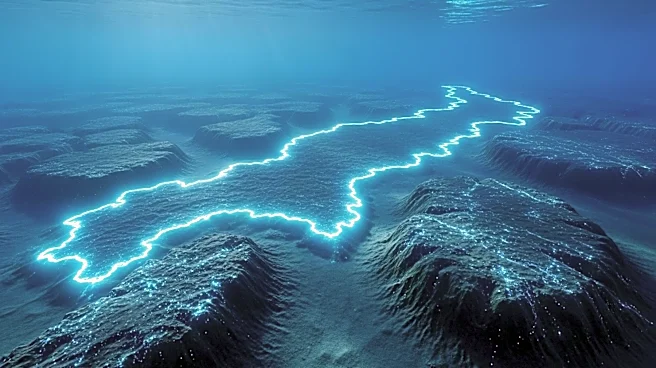
200 nautical miles from the coast, known as the Extended Continental Shelf (ECS). The newly claimed area spans seven offshore regions, including the Arctic, Atlantic coast, Bering Sea, Pacific coast, Mariana Islands, and the Gulf of Mexico. This move was facilitated by a 20-year mapping project, the largest of its kind undertaken by the U.S., which involved collecting geological data to define ECS limits. Despite not ratifying the United Nations Convention on the Law of the Sea (UNCLOS), the U.S. used its guidelines to establish these claims, bypassing the need for UN commission review.
Why It's Important?
This territorial expansion is significant due to the vast resources it encompasses, including oil, natural gas, and minerals critical for electric vehicle batteries. The Bureau of Ocean Energy Management estimates the U.S. Outer Continental Shelf holds 65.8 billion barrels of undiscovered oil and 218.4 trillion cubic feet of natural gas. The Arctic region alone could contain 90 billion barrels of oil. By not being a party to UNCLOS, the U.S. avoids paying royalties to the International Seabed Authority, potentially increasing economic benefits. However, this move raises questions about international law and could affect U.S. credibility in global maritime governance. The expansion also sets the stage for future negotiations with other nations, such as Canada and Russia, which have overlapping claims in the Arctic.
What's Next?
The U.S. will likely engage in diplomatic discussions with Canada and other Arctic nations to address overlapping claims. The expansion could lead to increased exploration and extraction activities in the newly claimed areas, potentially boosting the U.S. economy. However, it may also prompt international scrutiny and debate over the legality of the U.S. approach to claiming ECS territories. The scientific discoveries from the mapping project, such as the Cape Fear submarine landslide and Arctic seafloor features, will contribute to further research and exploration efforts.
Beyond the Headlines
The U.S. expansion of its seabed territory highlights the strategic importance of the Arctic and other offshore regions in global geopolitics. The move underscores the growing competition for natural resources and the potential for geopolitical tensions in the Arctic, where multiple nations have vested interests. The decision to bypass UNCLOS procedures could influence other countries' approaches to international maritime law, potentially leading to shifts in global governance structures. Additionally, the environmental impact of increased resource extraction in these sensitive regions will be a critical consideration for policymakers and environmental groups.