





What's Happening?
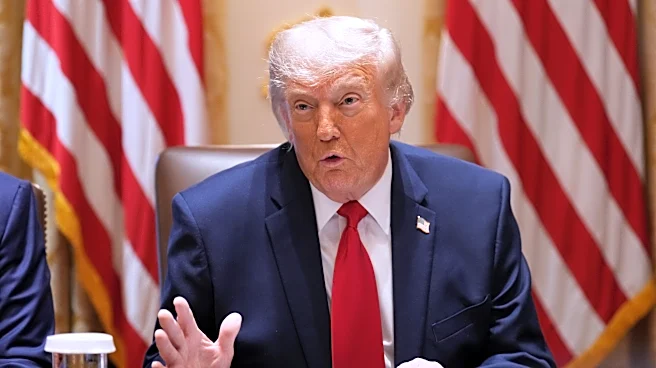
President Trump is rapidly depleting the United States' Strategic Petroleum Reserve (SPR) in response to the ongoing oil crisis exacerbated by the conflict with Iran. This depletion surpasses the rate at which President Joe Biden released oil from the reserve.
The SPR, which is the world's largest emergency crude stockpile, is approaching its lowest levels since the early 1980s. The current crisis has been intensified by the effective shutdown of the Strait of Hormuz, a critical chokepoint for global energy supplies, leading to a significant disruption in oil availability. As a result, the U.S. has become a key supplier of emergency crude to international markets, particularly in Asia and Europe, which have been severely impacted by the closure.
Why It's Important?
The accelerated depletion of the SPR has significant implications for both domestic and international energy markets. Domestically, the reduction in emergency reserves could lead to increased vulnerability to future supply disruptions, potentially driving up gasoline prices. Internationally, the U.S. has assumed the role of a 'supplier of last resort,' exporting a substantial portion of its emergency crude to meet global demand. This situation underscores the interconnectedness of global energy markets and the critical role of the U.S. in stabilizing them. However, the need to eventually replenish the SPR could maintain upward pressure on oil prices, affecting consumers and industries reliant on stable energy costs.
What's Next?
As the crisis continues, the U.S. may face pressure to consider measures such as restricting oil exports to stabilize domestic prices. However, such actions could destabilize global energy markets and harm U.S. refineries and producers. Analysts suggest that market forces will eventually limit U.S. exports as domestic inventories dwindle, making American crude less attractive to international buyers. The ongoing situation highlights the need for strategic planning in energy policy to balance domestic needs with international responsibilities.