



What's Happening?
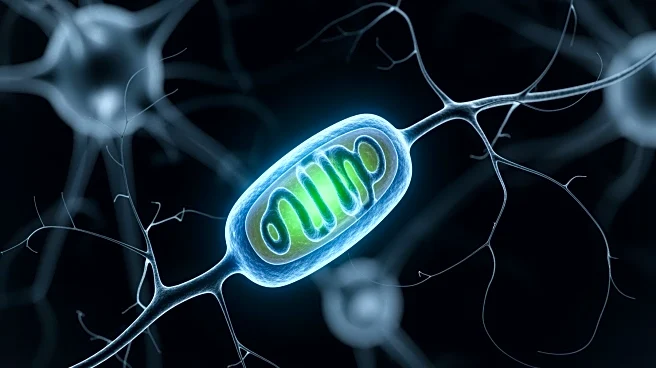
Recent research has highlighted the role of mitochondrial dynamics in microglia, the brain's resident immune cells, in responding to neurodegenerative diseases. The study, conducted on mice, found that microglial mitochondria exhibit region-specific phenotypes,
with differences in mitochondrial mass and number across brain regions. These differences are linked to microglial responses to early life immune challenges, brain injuries, and protein aggregates associated with neurodegenerative diseases. The research utilized transgenic mice to visualize microglial mitochondria and employed high-resolution imaging to analyze mitochondrial and microglial morphology. The findings suggest that mitochondrial abundance and morphology are crucial for microglial function and their ability to adapt to changes in the brain environment.
Why It's Important?
Understanding the role of mitochondria in microglia is significant for developing therapeutic strategies for neurodegenerative diseases. Microglia play a critical role in brain health, and their dysfunction is implicated in various neurological disorders. By elucidating how mitochondrial dynamics influence microglial function, this research could lead to new approaches in treating conditions like Alzheimer's and Parkinson's disease. The study's insights into mitochondrial involvement in microglial responses to brain injuries and protein aggregates provide a potential target for interventions aimed at modulating microglial activity to protect against neurodegeneration.
What's Next?
Future research will likely focus on further elucidating the molecular mechanisms underlying mitochondrial dynamics in microglia and their impact on neurodegenerative disease progression. Investigating how these processes can be modulated to enhance microglial function and mitigate disease symptoms will be crucial. Additionally, exploring the potential of targeting mitochondrial pathways in microglia as a therapeutic strategy could open new avenues for treating neurodegenerative diseases.