







What's Happening?
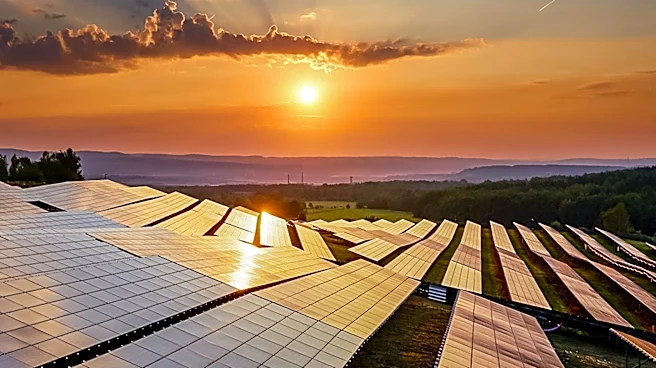
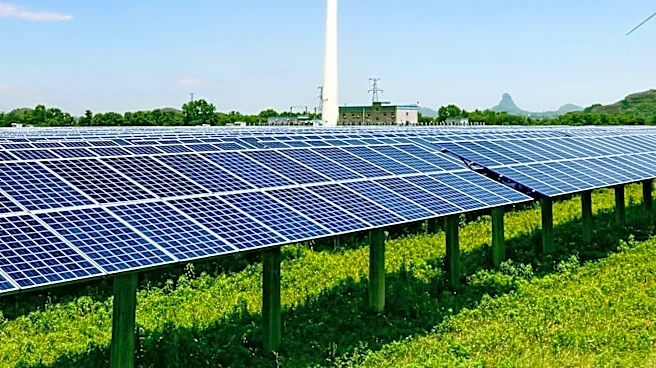
China is on the verge of a significant energy milestone as its installed solar power capacity is set to surpass coal-fired generation capacity this quarter. As of the end of June, solar power capacity in China stood at 1,274 gigawatts (GW), nearly matching
the coal-fired capacity of 1,275 GW. This development is part of China's broader strategy to increase its reliance on renewable energy sources. In the first half of 2026, the share of coal in China's electricity output fell below 50% for the first time, averaging 49.7%. Concurrently, renewable energy sources, including wind and solar, accounted for 41.2% of the total electricity generation, with wind and solar alone contributing nearly 25%. This shift is driven by China's policy to boost non-fossil power sources, as highlighted by the China Electricity Council (CEC).
Why It's Important?
This transition in China's energy landscape is significant for several reasons. Firstly, it underscores China's commitment to reducing its carbon footprint and addressing climate change by shifting away from fossil fuels. The increase in renewable energy capacity not only helps in reducing greenhouse gas emissions but also sets a precedent for other nations to follow. For the global energy market, this shift could lead to changes in coal demand and pricing, impacting coal-exporting countries. Additionally, the growth in renewable energy capacity may spur technological advancements and investments in the sector, potentially leading to cost reductions and increased adoption worldwide. This development also highlights the potential for renewable energy to play a dominant role in global energy supply, influencing energy policies and economic strategies across the globe.
What's Next?
As China continues to expand its renewable energy capacity, further reductions in coal dependency are expected. This could lead to increased investments in solar and wind technologies, both domestically and internationally. The Chinese government may also implement additional policies to support this transition, such as subsidies for renewable energy projects or stricter regulations on coal usage. The international community will likely monitor these developments closely, as China's energy policies can have far-reaching implications for global energy markets and climate change initiatives. Additionally, other countries may be encouraged to accelerate their own renewable energy transitions, potentially leading to a more sustainable global energy landscape.
Beyond the Headlines
The shift from coal to solar power in China also raises important questions about energy security and grid reliability. As renewable energy sources are often intermittent, ensuring a stable power supply will require advancements in energy storage technologies and grid management. Moreover, the transition may have socio-economic impacts, particularly in regions dependent on coal mining and related industries. Addressing these challenges will be crucial for a smooth transition to a more sustainable energy future. Furthermore, China's leadership in renewable energy could enhance its geopolitical influence, as it positions itself as a leader in the global fight against climate change.