











What's Happening?
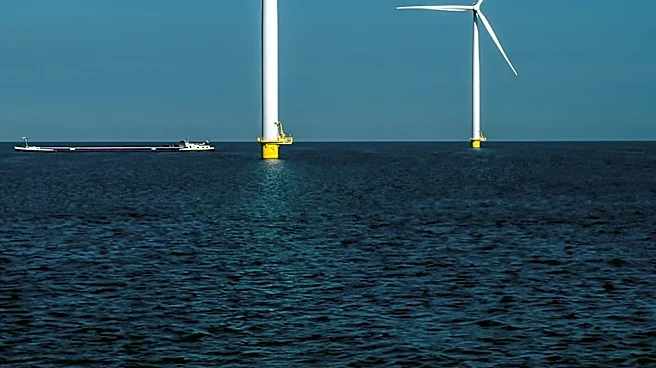
The Trump administration has halted offshore wind development projects, citing national security concerns. The Department of the Interior is buying back leases and stopping work on major projects, particularly off the East Coast. Interior Secretary Doug
Burgum referenced a classified report from Defense Secretary Pete Hegseth, which allegedly identifies offshore wind as a national security threat. The administration argues that wind turbines interfere with radar systems, posing risks to national security. This decision has led to legal challenges from several states and developers, who argue that the national security rationale is a pretext for promoting fossil fuels.
Why It's Important?
The halt on offshore wind projects has significant implications for the U.S. energy sector and environmental policy. Offshore wind is seen as a key component of renewable energy strategies, capable of providing substantial power to meet national consumption needs. The administration's decision to prioritize national security concerns over renewable energy development could slow progress towards clean energy goals and impact the U.S.'s ability to compete in the global renewable energy market. The legal challenges and skepticism from courts regarding the national security justification highlight the contentious nature of this policy shift.
What's Next?
The ongoing legal battles will determine the future of offshore wind projects in the U.S. If courts find the national security argument unconvincing, it could lead to the resumption of halted projects. Meanwhile, states and developers are likely to continue advocating for renewable energy development, emphasizing the economic and environmental benefits of offshore wind. The administration may face increasing pressure to balance national security concerns with the need for sustainable energy solutions, potentially leading to policy adjustments or technological innovations to mitigate radar interference issues.