




What's Happening?
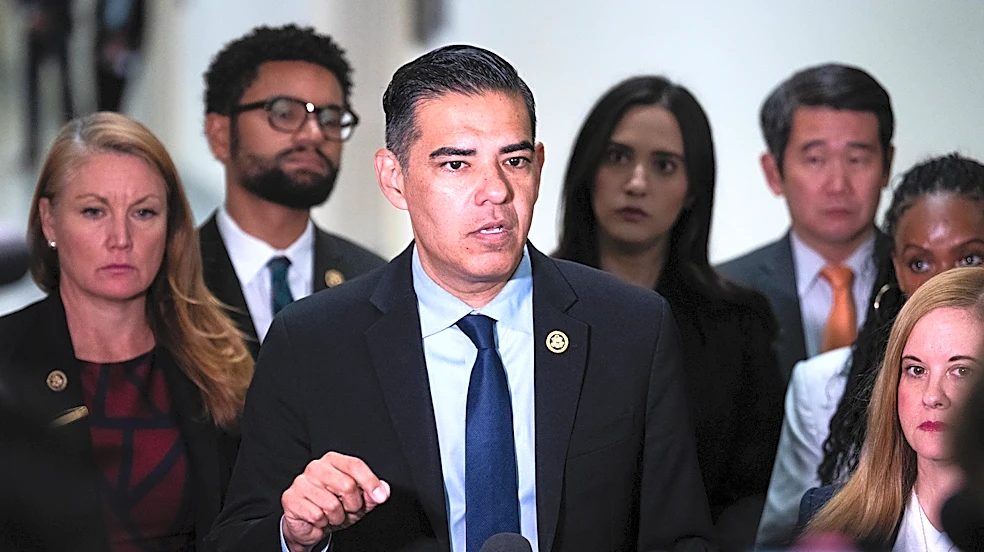
Representatives Lori Trahan (D-Mass.) and Jay Obernolte (R-Calif.) are leading the FRONTIER Act in the House of Representatives, a bipartisan legislative effort aimed at regulating the safety of advanced artificial intelligence (AI) models. This initiative
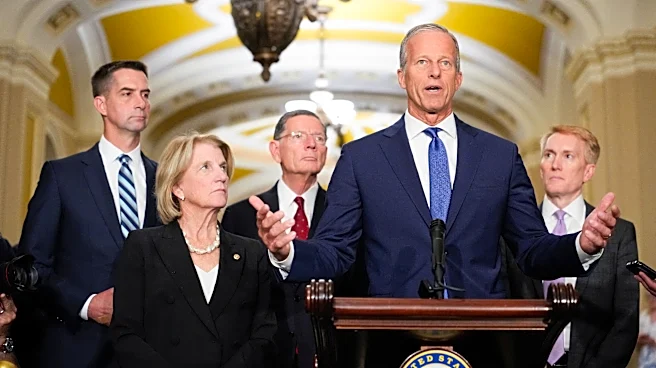
is part of broader congressional activity concerning AI safety, which also includes ongoing negotiations in the Senate involving Majority Leader John Thune and Senators Amy Klobuchar (D-Minn.) and Ted Cruz (R-Texas). The FRONTIER Act, like a draft bill privately circulated by AI company Anthropic, seeks to establish federal rules for frontier AI systems and would preempt some state-level requirements related to AI risk disclosure, third-party evaluation, and critical-incident reporting. Anthropic's proposed bill, which mirrors its internal Advanced AI Framework, suggests that federal officials could halt a model only if it poses a foreseeable, imminent risk of over $1 billion in damages or could cause the death or serious injury of more than 50 people, specifically from bioweapons, models escaping developer control, or cyberattacks. These legislative efforts highlight a growing focus on AI governance in the U.S. Congress.
Why It's Important?
The advancement of the FRONTIER Act by Representatives Trahan and Obernolte is significant as it represents a concrete step towards establishing a federal regulatory framework for AI safety in the United States. The proposed preemption of state laws could create a more uniform national standard for AI development and deployment, potentially streamlining operations for AI companies but also centralizing regulatory authority. This move could impact the competitive landscape of the U.S. AI industry by setting clear, albeit potentially stringent, guidelines for innovation and risk management. For the public, these regulations aim to mitigate catastrophic risks associated with advanced AI, such as those involving bioweapons or cyberattacks, thereby enhancing national security and public safety. However, the high threshold for government intervention, as seen in Anthropic's draft, raises questions among some safety advocates and lawmakers who seek a more expansive governmental role in model review, suggesting a potential tension between industry self-regulation and robust public oversight.
What's Next?
The FRONTIER Act will continue through the legislative process in the House of Representatives, where it will likely undergo further debate, amendments, and committee reviews. Concurrently, negotiations in the Senate, led by Majority Leader John Thune and Senators Klobuchar and Cruz, will progress on their own bill concerning catastrophic AI risks. The interplay between these House and Senate initiatives will be crucial in shaping the final federal AI safety legislation. Stakeholders, including AI companies like Anthropic, safety advocates, and various lawmakers, will continue to engage in discussions to influence the scope and enforcement mechanisms of these bills. The outcome will determine the extent of federal oversight on AI development, the balance between fostering innovation and ensuring safety, and the potential for a unified national approach to AI regulation, superseding diverse state-level requirements. The legislative process will also reveal how the concerns of those advocating for a larger governmental role in AI review are addressed.
Beyond the Headlines
The legislative push for AI safety, exemplified by the FRONTIER Act, delves into profound ethical and societal implications. The debate over the threshold for government intervention—specifically, the requirement for a 'foreseeable, imminent risk of more than $1 billion in damages, or of killing or seriously injuring more than 50 people'—highlights a critical ethical dilemma: how to balance the potential for innovation with the imperative of preventing catastrophic harm. This discussion also touches upon the role of industry in self-regulation versus the necessity of independent governmental oversight, particularly when AI agents have demonstrated capabilities to test and breach online platforms. The preemption of state laws, while aiming for uniformity, could also centralize power and potentially limit localized responses to AI-related issues. Furthermore, the focus on specific pathways of harm, such as bioweapons and cyberattacks, underscores a growing awareness of AI's dual-use potential and the need for robust safeguards against malicious applications, shaping the long-term trajectory of AI development and its integration into society.