









What's Happening?
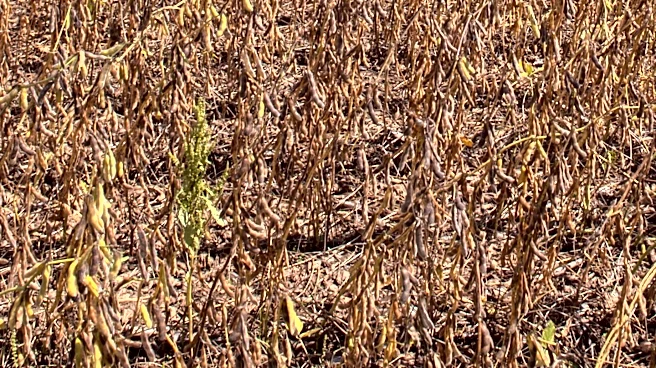
The condition of the 2026 U.S. corn crop remains stable at 67% rated good/excellent, while the soybean crop saw a slight decline to 64% rated good/excellent. Improvements in corn conditions were noted in ten states, primarily in central areas, whereas
declines were observed in eight states, mostly in the western regions. The top-rated corn states include Minnesota, Wisconsin, Pennsylvania, Michigan, and Tennessee, while the lowest-rated are North Carolina, Colorado, Texas, Ohio, and Illinois. For soybeans, nine states reported improvements, seven reported declines, and two remained unchanged. The top-rated soybean states are Minnesota, Wisconsin, Iowa, Tennessee, and Mississippi, with the lowest ratings in North Carolina, Ohio, North Dakota, Illinois, and Missouri. Soil moisture levels have decreased nationally, with improvements in six states and declines in twelve, predominantly in the southern areas.
Why It's Important?
The condition of corn and soybean crops is crucial for the U.S. agricultural sector, impacting both domestic food supply and international trade. The stability in corn conditions suggests a potentially steady yield, which is vital for industries relying on corn as a raw material. However, the decline in soybean conditions could affect supply chains and pricing, influencing both farmers and consumers. Soil moisture variations highlight regional disparities that could lead to uneven crop yields, affecting economic stability in agricultural communities. The data also provides insights for policymakers and agricultural businesses to strategize resource allocation and support for affected areas.
What's Next?
As July is a critical month for corn pollination and soybean flowering, weather patterns in the coming weeks will be pivotal. Forecasts indicate hotter and drier conditions, which could further impact crop conditions. Stakeholders, including farmers and agricultural businesses, will need to monitor these developments closely. Potential government interventions or support measures may be considered to mitigate adverse effects on crop yields and ensure food security.