







What's Happening?
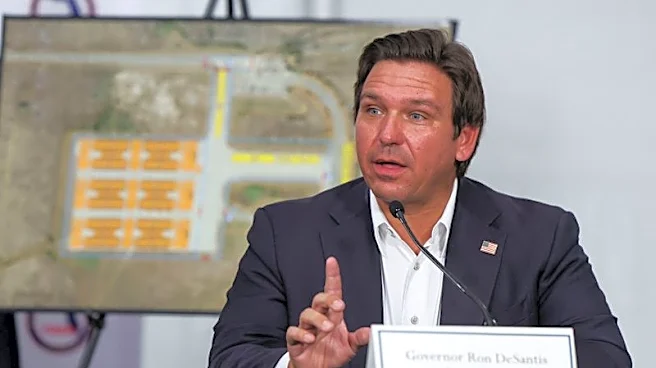
A significant divide has emerged between Florida Governor Ron DeSantis and House Speaker Daniel Perez regarding property tax reform. Perez has expressed frustration over the absence of a concrete plan to reduce homeowners' property tax bills, despite
DeSantis's public promises to abolish these taxes. The House had previously proposed a bill, HJR 203, to phase out non-school property taxes on primary residences over a decade, starting in 2027. However, the Florida Senate did not advance this proposal, opting instead to develop its own version of tax reform. DeSantis, while supportive of eliminating property taxes, has not endorsed the House's proposal. The upcoming special legislative session does not include property tax reform on its agenda, further exacerbating tensions. Perez has criticized DeSantis for not delivering a proposal, despite his repeated public commitments.
Why It's Important?
The ongoing debate over property tax reform in Florida highlights the challenges of implementing significant fiscal policy changes. The outcome of this debate could have substantial implications for Florida homeowners, potentially reducing their financial burden. However, the lack of consensus among state leaders could delay or derail these reforms, affecting public trust in government promises. The situation underscores the complexities of balancing state revenue needs with taxpayer relief, a common issue in state politics. The rift also reflects broader political dynamics within Florida's government, which could influence future legislative priorities and the political landscape in the state.
What's Next?
As the special session approaches, the absence of property tax reform on the agenda suggests that immediate action is unlikely. However, the issue remains a priority for many lawmakers and constituents. Governor DeSantis has indicated that any proposal would need to be phased in and eventually put to a public vote, requiring significant legislative support. The coming months may see continued negotiations among Florida's legislative leaders to develop a viable plan that can gain the necessary support. The outcome will likely depend on the ability of state leaders to reconcile differing approaches and priorities.