
What's Happening?
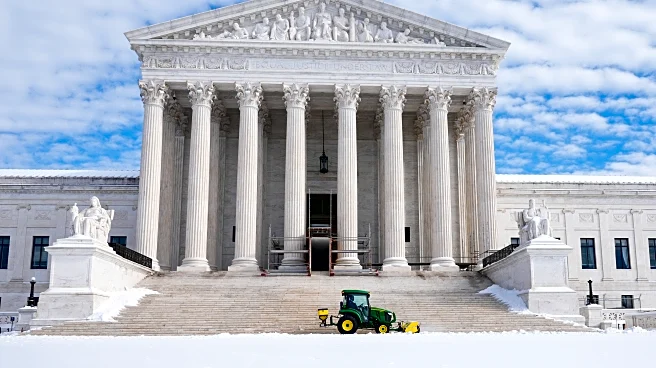
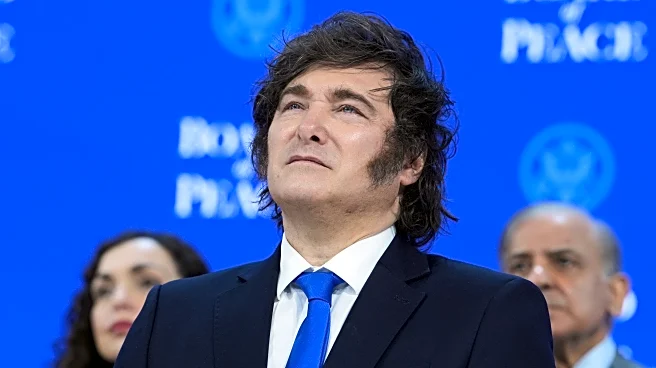
President Trump has expressed concern over the potential consequences if the Supreme Court rules against his use of emergency powers to impose tariffs. The court is expected to decide soon on the legality
of tariffs that were introduced last April, which include a 10% baseline for most countries and higher rates for nations with which the U.S. has a trade deficit. These tariffs were part of Trump's strategy to negotiate better trade terms and encourage foreign investment in the U.S. However, if the court rules against these tariffs, the U.S. government may have to repay hundreds of billions of dollars collected from these tariffs. The case, Learning Resources v. Trump, challenges the tariffs under the International Emergency Economic Powers Act, arguing they constitute an unconstitutional tax.
Why It's Important?
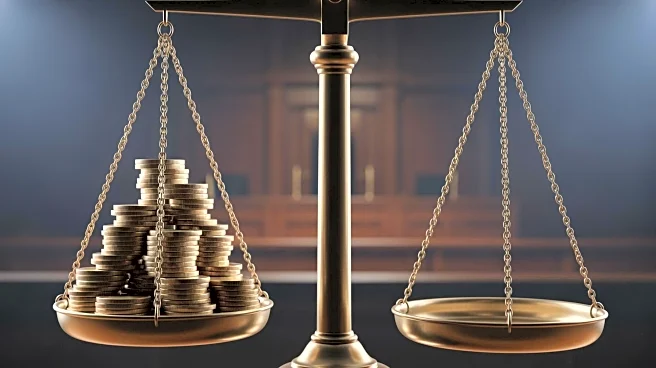
The Supreme Court's decision could have significant financial implications for the U.S. economy. If the tariffs are deemed unconstitutional, the government would need to repay a substantial amount of money to businesses affected by the tariffs. This could strain federal resources and impact the U.S. Treasury, which currently holds $774 billion in cash. The decision could also affect international trade relations, as many countries and companies have made investments to avoid these tariffs. A ruling against the tariffs could lead to a reevaluation of trade policies and economic strategies, potentially impacting industries reliant on international trade.
What's Next?
Should the Supreme Court rule against the tariffs, the Trump administration may seek new legal justifications to reimpose them. The federal government would face the logistical challenge of repaying the collected tariffs, which could take months or even years. This situation could lead to further legal battles and negotiations with affected businesses and trading partners. The decision will also likely prompt discussions on the limits of presidential powers in imposing economic measures under emergency declarations.