





What's Happening?
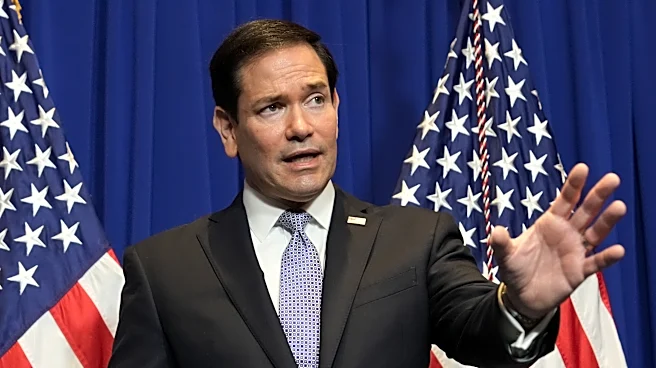
Director of National Intelligence Jay Clayton stated on Tuesday that recent technical issues affecting the National Security Agency (NSA) and other sectors are not the result of a cyberattack or coordinated state-sponsored activity. This declaration came
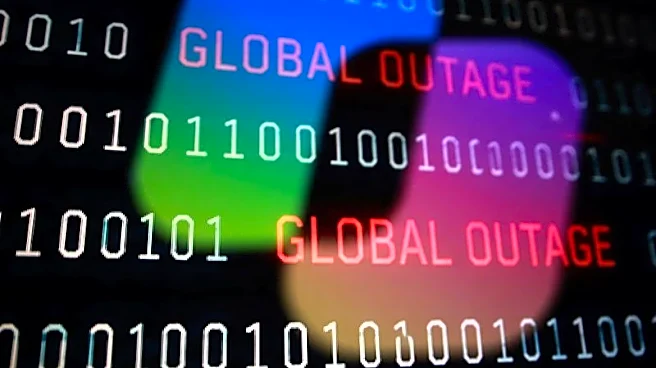
after an internal classified communications network at the NSA went offline due to what the agency described as 'routine maintenance.' The NSA confirmed that while some internal systems were affected, mission-critical capabilities remained fully operational. The outage at the NSA is part of a series of recent tech disruptions, including a system overload that grounded air traffic in the U.S., a technical issue at JPMorgan Chase, and an internal systems outage at United Airlines. Apple also reported outages for its Apple Music, App Store, and AppleCare services following an internal update. According to Clayton, these incidents are attributed to government institutions and private companies simultaneously upgrading their computer systems to address vulnerabilities in legacy infrastructure. Senator Mark Warner, vice chairman of the Senate Intelligence Committee, echoed this assessment, suggesting that artificial intelligence is accelerating the identification of system vulnerabilities, thus pressuring organizations to implement patches rapidly, which can strain existing systems.
Why It's Important?
The statements from Director Clayton and Senator Warner are crucial for national security and public confidence, as they aim to allay fears of a coordinated cyberattack against critical U.S. infrastructure and private sector entities. In an era of heightened cybersecurity concerns, any widespread technical disruption can quickly lead to speculation about malicious foreign activity. By attributing these outages to system upgrades and maintenance, the Trump administration is attempting to prevent panic and maintain stability in financial markets and public services. The emphasis on the need for system upgrades highlights a significant challenge facing both government and private sectors: the continuous battle against evolving cyber threats and the inherent risks associated with modernizing complex digital infrastructures. The role of AI in identifying vulnerabilities, as noted by Senator Warner, underscores the double-edged sword of advanced technology—while it can enhance security, it also intensifies the pressure on organizations to adapt quickly, potentially leading to more frequent, albeit non-malicious, disruptions during transition periods. This situation also brings to light the interconnectedness of various critical systems, where an issue in one sector can have ripple effects across others, as seen with the air traffic control and financial system disruptions.
What's Next?
The immediate next steps will likely involve continued efforts by government agencies and private companies to complete their system upgrades and patching processes. Director Clayton indicated that more such 'hiccups' could occur as organizations continue to modernize their digital infrastructure. There will likely be ongoing scrutiny and calls for transparency regarding these incidents, even if they are deemed non-malicious. Policymakers and cybersecurity experts will probably further explore the implications of AI's role in identifying system vulnerabilities, potentially leading to new policies or best practices for managing rapid-fire patching and upgrades. The focus will remain on strengthening digital resilience and ensuring that critical services can withstand both planned maintenance and unexpected events without significant operational impact. The intelligence community and relevant government bodies will continue to monitor for any signs of actual cyberattacks, maintaining vigilance despite the current assessment. Furthermore, the public and private sectors may engage in more collaborative efforts to share insights and strategies for managing large-scale system modernizations to minimize disruptions.
Beyond the Headlines
Beyond the immediate technical explanations, these widespread outages underscore a broader societal and governmental challenge: the increasing reliance on complex digital systems and the inherent fragility that comes with such dependence. The narrative that these are 'not cyberattacks' but rather consequences of necessary upgrades points to a systemic vulnerability in the digital age. It highlights the constant tension between innovation and stability, where the push for more advanced, secure systems inevitably introduces periods of instability. This situation could lead to a re-evaluation of how critical infrastructure upgrades are planned and executed, potentially favoring more staggered or resilient deployment strategies. Ethically, it raises questions about the public's right to know the full extent of system vulnerabilities and the transparency of government and corporate responses. Culturally, it may reinforce a growing public skepticism about the reliability of digital services, even as they become more integrated into daily life. The long-term implication could be a shift towards designing systems with greater redundancy and fault tolerance, acknowledging that 'routine maintenance' in a highly interconnected world can have significant, albeit temporary, consequences.