


What's Happening?
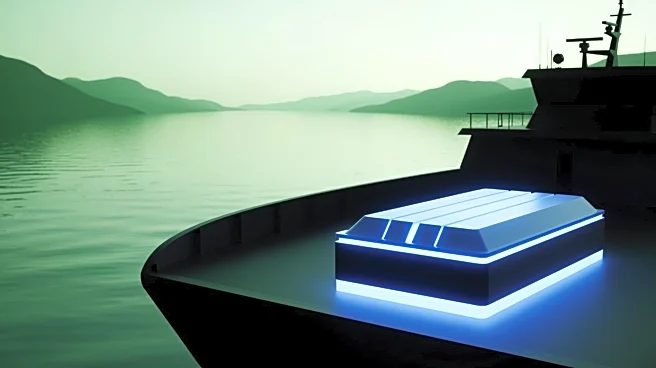
Nereida Energy has entered into a contract to supply maritime battery systems with a total capacity of 17MWh to Frydenbø Elmarin. These systems will be installed on two ferries owned by Vestlandske Trafikk, which are set to be converted to electric propulsion.
The conversion is scheduled to be completed by the summer of 2026, in time for the new zero-emission requirements in the Geirangerfjord, a UNESCO World Heritage Site. The project involves the installation of two advanced Nereida Energy LFP battery systems, with one system of 12.7 MWh capacity for the MF Hjørungavåg and another of 4.4 MWh for the MF Jotunheim. This initiative aims to significantly reduce emissions and help preserve the natural environment of the fjord.
Why It's Important?
This development is significant as it aligns with global efforts to reduce maritime emissions and protect environmentally sensitive areas. The Geirangerfjord, being a UNESCO World Heritage Site, is subject to stringent environmental regulations, and the conversion of ferries to electric propulsion is a critical step in meeting these standards. The project not only supports environmental sustainability but also sets a precedent for similar initiatives worldwide. By adopting zero-emission technologies, the maritime industry can contribute to global climate goals and reduce its carbon footprint, potentially influencing policy and operational standards across the sector.
What's Next?
As the project progresses, stakeholders will likely monitor the implementation and performance of the battery systems closely. Successful execution could lead to further adoption of similar technologies in other regions, especially those with strict environmental regulations. Additionally, the maritime industry may see increased investment in research and development of sustainable technologies, driven by regulatory pressures and the need for compliance with international environmental standards. The outcome of this project could also influence future policy decisions regarding emissions in protected areas.