










What's Happening?
TruMerit's analysis reveals a significant governance gap in the global management of health workforce mobility, emphasizing that current frameworks, such as the WHO Global Code of Practice and ILO standards, are largely voluntary and lack a coherent global system.
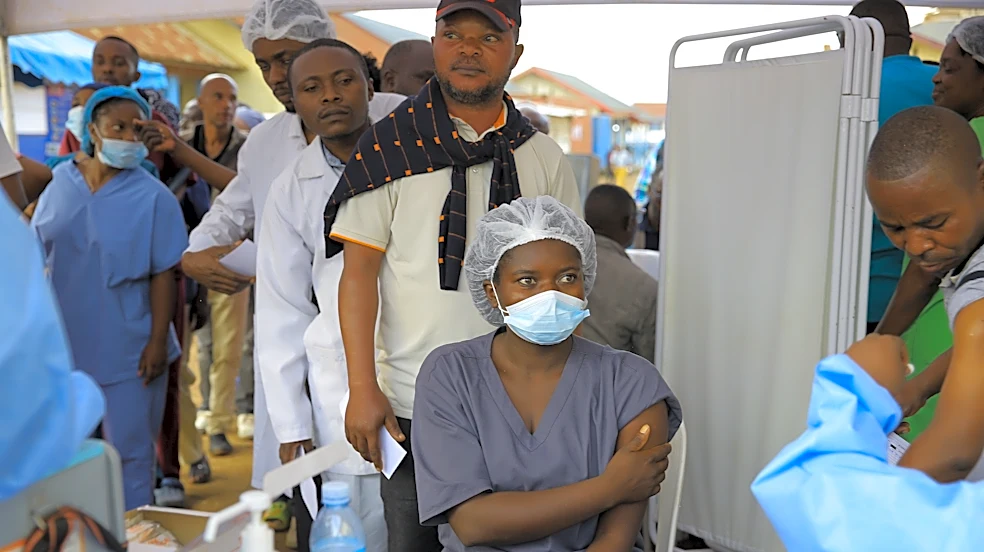
This fragmentation means that while international organizations provide norms and guidance, the actual system relies heavily on voluntary compliance rather than enforceable global rules. The report underscores that health workforce migration is not merely a staffing issue or a sum of individual decisions, but a complex interplay of global labor markets, wage differentials, public investment, immigration policies, and unequal bargaining relationships between countries. High-income countries increasingly depend on foreign-educated health professionals, with over 830,000 foreign-born doctors and 1.75 million foreign-born nurses in OECD countries in 2020-2021, indicating a structural shift in how these nations manage demographic changes and workforce gaps. Meanwhile, many source countries face the paradox of severe health workforce shortages alongside high unemployment rates for trained professionals, highlighting a political economy problem where education systems produce graduates but health systems lack the funding to employ them.
Why It's Important?
The fragmented governance of health workforce migration has profound implications for global health equity and economic stability. For the U.S. and other high-income countries, continued reliance on foreign-trained health professionals without a coherent global system can lead to ethical dilemmas and unsustainable practices, potentially exacerbating 'brain drain' in developing nations. This reliance also means that the U.S. healthcare system's stability is intrinsically linked to the policies and economic conditions of other countries. For source countries, the inability to retain their trained health workers due to lack of funding or opportunities represents a significant loss of investment and human capital, hindering their own healthcare development and economic growth. The current system, driven by individual country policies on visas, credential recognition, and recruitment, creates inefficiencies and inequities, impacting patient care globally and potentially leading to a less resilient global health infrastructure, as evidenced during the COVID-19 pandemic.
What's Next?
Addressing the governance gap requires a multi-faceted approach that integrates health workforce migration into global labor market governance. This involves aligning migration policy, workforce planning, education investment, health financing, and ethical recruitment through bilateral agreements that consider the needs of both origin and destination countries. Future steps should also focus on improving the system's practical functioning by developing more transparent and interoperable approaches to verifying and benchmarking credentials, which would enhance efficiency and safety without lowering standards. Furthermore, there needs to be a more equitable distribution of benefits and responsibilities, with mechanisms to support countries that contribute to the global supply of health professionals. This includes shared investment, training partnerships, and retention support. The conversation must extend beyond health ministries to include finance ministries, labor authorities, education planners, migration policymakers, and international economic institutions to foster a more balanced and effective global policy agenda.
Beyond the Headlines
The issue of health workforce migration extends beyond mere economics and policy, touching upon deep ethical and social considerations. The current system often treats health professionals as commodities, overlooking their fundamental right to seek better opportunities while simultaneously burdening their home countries. The lack of a unified global framework raises questions about international solidarity and shared responsibility, particularly when high-income nations benefit from the educational investments of lower-income countries. This dynamic can perpetuate global inequalities and undermine the development goals of vulnerable nations. A more ethical approach would recognize health professionals as rights-bearing individuals and advocate for policies that ensure fair recruitment, decent work, and social protection, while also investing in the capacity of source countries to retain their own workforce. This shift would foster a more just and sustainable global health ecosystem, where the movement of health professionals benefits all parties involved, rather than disproportionately favoring wealthier nations.