
What's Happening?
Virginia Governor Abigail Spanberger announced that the state will conduct its 2026 congressional elections using the existing 2021 map. This decision comes as the U.S. Supreme Court considers whether
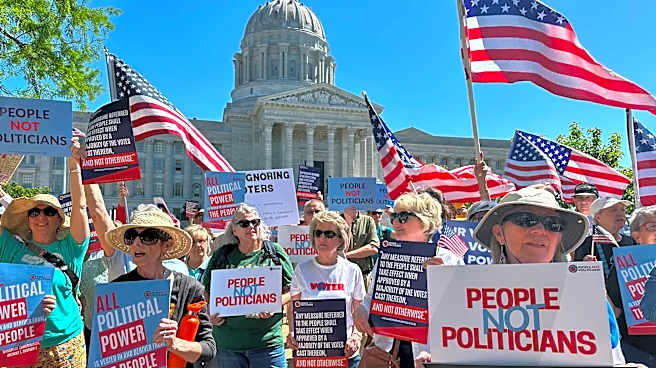
to pause a Virginia Supreme Court ruling that nullified a voter-approved redistricting referendum. The referendum, which was passed by a majority of voters, aimed to redraw the state's congressional map to counteract Republican gerrymandering in other states. However, the Virginia Supreme Court ruled the process unconstitutional. The proposed Democratic map could have shifted the balance to a 10-1 Democratic advantage, but the current map maintains a 6 Democratic, 5 Republican delegation. Spanberger expressed disappointment with the court's decision but emphasized the importance of focusing on upcoming elections.
Why It's Important?
The decision to use the old map is significant as it affects the political landscape in Virginia, potentially impacting the balance of power in the U.S. House of Representatives. The ruling highlights ongoing tensions between state and federal judicial interpretations of redistricting laws. The outcome could influence voter turnout and engagement, particularly among those who supported the referendum. The case also underscores the broader national debate over gerrymandering and its implications for fair representation. The decision may set a precedent for how other states handle similar disputes, especially in light of recent Supreme Court decisions affecting voting rights.
What's Next?
The U.S. Supreme Court's decision on whether to pause the Virginia Supreme Court ruling is pending. If the pause is granted, it could lead to further legal challenges and potentially alter the electoral map before the midterms. Political parties and candidates will need to strategize based on the current map, focusing on voter outreach and engagement. The ruling may also prompt legislative efforts to address redistricting processes and ensure compliance with constitutional requirements. Stakeholders, including civil rights groups and political organizations, are likely to continue advocating for fair representation and challenging perceived gerrymandering.