






What's Happening?
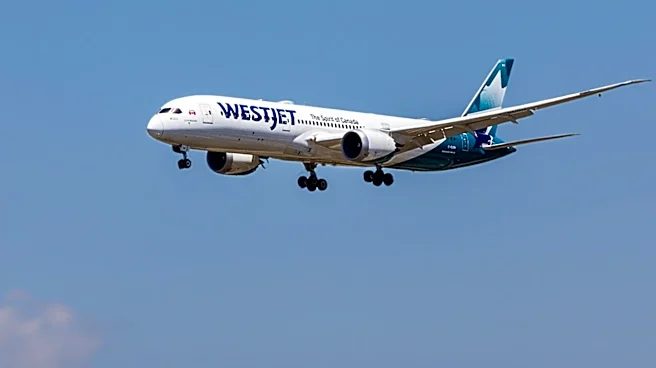
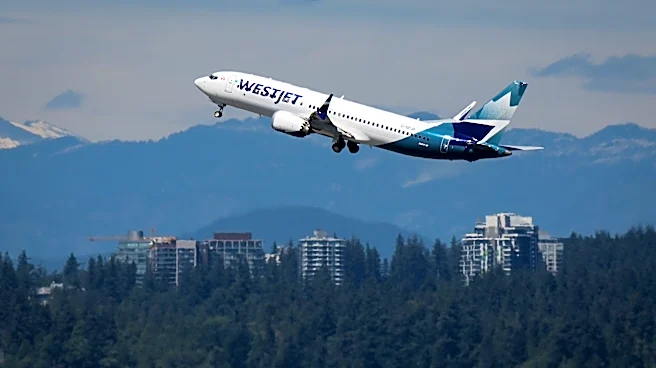
Flight attendants at WestJet, Canada's second-largest airline, initiated a strike on Sunday due to a dispute over pay. The strike was announced by the Canadian Union of Public Employees, which represents 4,400 cabin crew members at WestJet. As a result,
the airline canceled over 300 flights, disrupting travel plans across Canada during a three-day weekend. The core issue in the dispute is the compensation for duties performed by flight attendants while on the ground. The union claims that some of this work is unpaid, whereas WestJet asserts that its staff is compensated through a 'credit hour' system rather than an hourly rate. Despite WestJet's proposal to offer an hourly rate covering all time before and after flights, along with a double-digit wage increase in the first year, the union did not accept the offer. Both parties have expressed willingness to resume negotiations to reach an agreement.
Why It's Important?
The strike by WestJet flight attendants highlights ongoing labor disputes within the airline industry, particularly concerning fair compensation for cabin crew members. This disruption affects not only the airline's operations but also travelers who rely on WestJet for their travel plans. The strike underscores the importance of addressing labor concerns to prevent operational disruptions and maintain customer satisfaction. Additionally, the strike may influence other airlines to reevaluate their compensation structures for ground duties performed by flight attendants, potentially leading to industry-wide changes. The situation also reflects broader labor issues in the aviation sector, where workers seek recognition and fair compensation for their roles.
What's Next?
WestJet and the union representing its flight attendants have indicated a willingness to resume negotiations to resolve the pay dispute. The outcome of these negotiations could set a precedent for other airlines in Canada and potentially influence labor relations in the aviation industry. Travelers affected by the cancellations will be refunded or re-accommodated, and WestJet has committed to contacting customers directly. The strike may prompt other airlines to proactively address similar labor concerns to avoid disruptions, especially during peak travel seasons.
Beyond the Headlines
The strike at WestJet may have broader implications for labor relations in the airline industry, particularly concerning the compensation of flight attendants for ground duties. This issue has previously led to strikes at other airlines, such as Air Canada, indicating a recurring challenge in the sector. The resolution of this dispute could influence how airlines structure their pay systems and negotiate with unions, potentially leading to more standardized compensation practices across the industry. Additionally, the strike highlights the importance of effective communication and negotiation between airlines and unions to prevent operational disruptions and ensure fair treatment of employees.