




What's Happening?
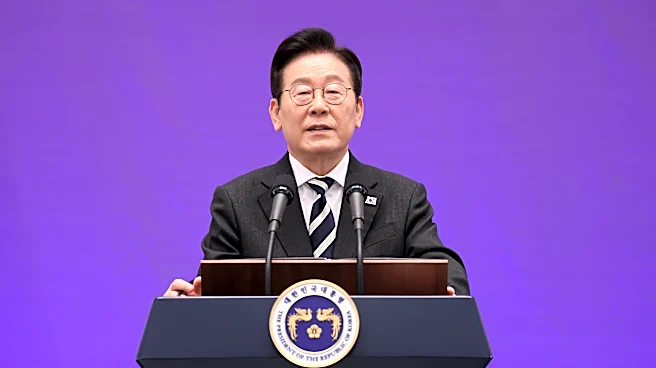
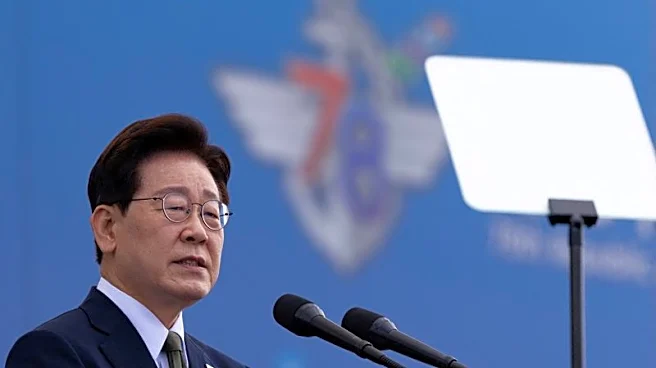
President Lee Jae Myung has pledged to intensify efforts to restore the honor of civilians who were killed due to state violence around the time of the 1950-53 Korean War. Speaking at a joint memorial service for civilian victims of state violence held
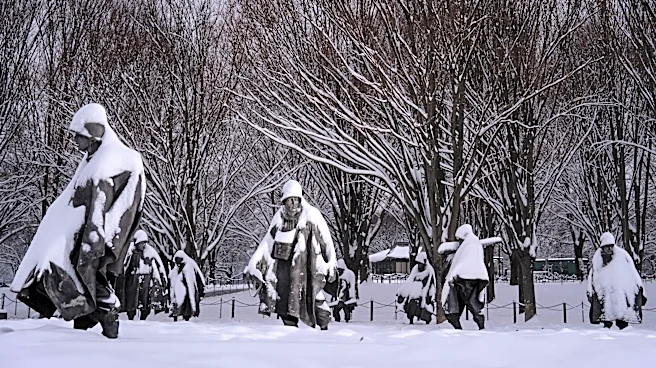
at Seoul City Hall, President Lee stated that it is the state's duty to uncover the truth and redress historical wrongs. He specifically referenced an incident in 1950 where U.S. troops reportedly opened fire on South Korean refugees at Nogeun-ri, believing North Korean soldiers were among them, resulting in hundreds of civilian deaths. Following the revelation of such incidents, South Korea established the Truth and Reconciliation Commission in 2005 to investigate cases of state violence. President Lee vowed to step up efforts to excavate and identify the remains of victims, ensuring their return to families, and committed to the prompt construction of a memorial facility in Daejeon for these victims.
Why It's Important?
This pledge by President Lee Jae Myung is a significant step towards historical reconciliation and justice for victims of state violence during a tumultuous period in the nation's history. Acknowledging and redressing past wrongs is crucial for national healing and strengthening democratic values. The commitment to excavate and identify remains provides closure for families who have long sought answers and recognition for their lost loved ones. The construction of a memorial facility will serve as a permanent reminder of these tragic events, fostering a collective memory and preventing similar atrocities. This initiative also reinforces the principle of state accountability and the importance of truth commissions in addressing historical injustices. It can help build trust between the government and its citizens, particularly those who have been marginalized or suffered at the hands of the state.
What's Next?
The immediate next steps involve the implementation of President Lee's pledges, including intensified efforts to excavate and identify the remains of civilian victims. This will require significant resources and coordination among various government agencies and historical organizations. Concurrently, plans for the prompt construction of a memorial facility in Daejeon will likely move forward. These actions are expected to be guided by the findings and recommendations of the Truth and Reconciliation Commission. The government will also need to engage with victims' families and civil society groups to ensure that the process is transparent and addresses their needs and concerns. The ongoing efforts will aim to provide a comprehensive and dignified resolution for those affected by state violence during the Korean War era.
Beyond the Headlines
The President's commitment to addressing historical state violence has broader implications for human rights and transitional justice. It sets a precedent for how a nation confronts its past, particularly in cases where state actions led to civilian casualties. This initiative could inspire other countries grappling with similar historical traumas to undertake their own processes of truth-seeking and reconciliation. Ethically, it underscores the moral imperative of a state to acknowledge its role in past injustices and to provide reparations, both symbolic and tangible, to victims. Culturally, the construction of a memorial and the identification of remains contribute to a more complete and nuanced national narrative, ensuring that the experiences of all citizens, including those who suffered, are recognized and remembered. This process is vital for fostering a society that values human dignity and prevents the recurrence of such violence.