
What's Happening?
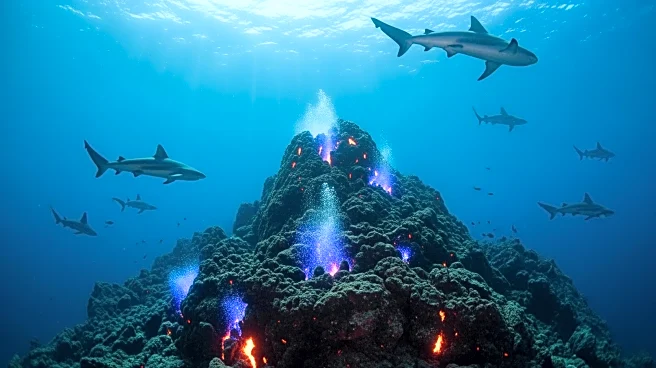
In a surprising discovery, scientists have found large marine predators, including hammerhead and silky sharks, thriving inside the caldera of Kavachi, one of the world's most active underwater volcanoes
located near the Solomon Islands. This finding was made during a 2015 scientific expedition led by ocean engineer Brennan Phillips. The team deployed a deep-sea camera into the volcano's crater, capturing footage of sharks and a stingray swimming in the hot, acidic waters, seemingly unaffected by the harsh conditions. Kavachi is known for frequent eruptions that release lava, ash, and highly acidic water, making it an environment previously thought inhospitable to complex marine life. The presence of these animals in such a volatile environment raises questions about their survival strategies and potential adaptations.
Why It's Important?
The discovery of sharks living inside an active underwater volcano challenges existing scientific assumptions about marine life survival in extreme environments. This finding could have significant implications for understanding how marine species adapt to harsh conditions, which is increasingly relevant in the context of global climate change and rising ocean temperatures. The ability of these sharks to thrive in such an environment suggests potential physiological or behavioral adaptations that could inform broader ecological studies. Additionally, this discovery highlights the need for further research into the resilience of marine life, which could contribute to conservation efforts and the development of strategies to protect vulnerable species in changing oceanic conditions.
What's Next?
Future research will likely focus on understanding the specific adaptations that allow these sharks to survive in Kavachi's extreme environment. Scientists may conduct further expeditions using robotic equipment to safely study the volcano's ecosystem without risking human divers. These studies could explore whether the sharks possess unique physiological traits or behavioral patterns that enable them to detect and respond to volcanic activity. Additionally, researchers may investigate the broader ecological implications of this discovery, potentially leading to new insights into marine biodiversity and resilience in the face of environmental stressors.
Beyond the Headlines
The presence of sharks in Kavachi's caldera raises intriguing questions about the limits of life in extreme environments. This discovery could prompt a reevaluation of the conditions under which complex life can exist, potentially expanding the scope of astrobiology and the search for life on other planets. The study of these sharks may also contribute to a deeper understanding of evolutionary processes and the development of adaptations in response to environmental challenges. Furthermore, this finding underscores the importance of preserving diverse marine ecosystems, as they may hold key insights into the resilience and adaptability of life on Earth.