





What's Happening?
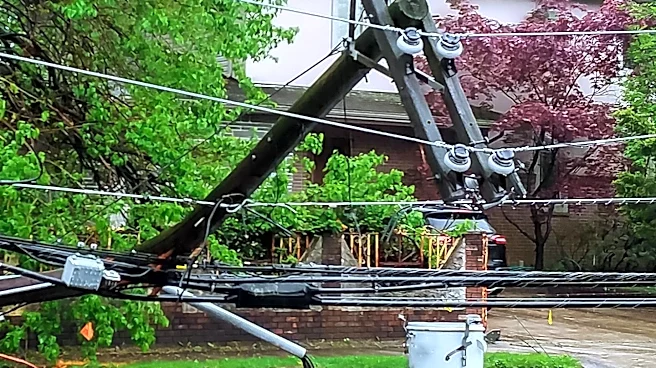
A recent power outage in Richmond, Virginia, caused by a car striking a utility pole on November 2, led to a drop in water pressure in the city's Fan and Northside neighborhoods. This incident highlighted ongoing issues with the Department of Public Utilities'
(DPU) backup power systems. Crews manually connected a generator to restore power to two impacted pump stations, resolving the low water pressure within hours and preventing a prolonged outage similar to the 2025 water crisis. Engineer Joel Paulsen, with 20 years of experience in water systems, noted that a city the size of Richmond should ideally have automatic switching for power to ensure uninterrupted pump operations and consistent water pressure. The DPU spokesperson, Rhonda Johnson, confirmed that the backup power systems are a mix of automatic and manual generators. A February 2026 capital improvement plan document identified one of the affected pump stations for an automatic generation upgrade, with completion expected within three years.
Why It's Important?
This incident underscores a critical infrastructure vulnerability in Richmond, particularly concerning essential services like water supply. The reliance on manual generator connection, despite mitigating a larger crisis this time, indicates a systemic gap in ensuring continuous service during power disruptions. The 2025 water crisis, which stemmed from a power outage at the main drinking water plant and a lack of automatic generators, serves as a stark reminder of the potential for widespread disruption. While the Virginia Department of Health recommended automatic power transfer for the main plant after the 2025 crisis, similar recommendations were not extended to all smaller pump stations. The current situation suggests that without comprehensive automatic backup power across all critical pump stations, Richmond remains susceptible to water service interruptions, impacting public health, daily life, and potentially business operations. The ongoing upgrades are crucial for enhancing the city's resilience against future outages.
What's Next?
The DPU plans to complete the automatic generation upgrade for one of the impacted pump stations within the next three years, as outlined in its February 2026 capital improvement plan. This upgrade aims to reduce restoration times and minimize pressure fluctuations during power outages. However, the DPU spokesperson, Rhonda Johnson, noted that even with automatic transfer switches, staff would still need to check the system for proper operations. The incident may prompt further evaluation of the city's broader water infrastructure and backup power strategies, potentially leading to accelerated upgrades or expanded implementation of automatic systems across more pump stations. Public and expert scrutiny, like that from Engineer Joel Paulsen, will likely continue to pressure the DPU to enhance the reliability of its water system to prevent future disruptions and ensure consistent service for residents.
Beyond the Headlines
The recurring issues with Richmond's water infrastructure highlight a broader challenge faced by many U.S. cities: the need for continuous investment in and modernization of aging public utilities. The distinction between manual and automatic backup power systems, while seemingly technical, has significant implications for public safety and quality of life. The 2025 water crisis and the recent incident serve as case studies in the critical importance of resilient infrastructure in an era of increasing climate volatility and potential for unforeseen disruptions. Beyond the immediate operational fixes, these events raise questions about long-term urban planning, funding mechanisms for infrastructure improvements, and the balance between cost-efficiency and robust public services. The ethical responsibility of municipalities to provide uninterrupted essential services is brought to the forefront, emphasizing the need for proactive rather than reactive infrastructure management.