




What's Happening?
The United States has launched a series of strikes against Iran in response to the downing of a US Apache helicopter near Oman. The US Central Command described these actions as 'self-defense strikes' aimed at Iranian air-defense systems, ground-control
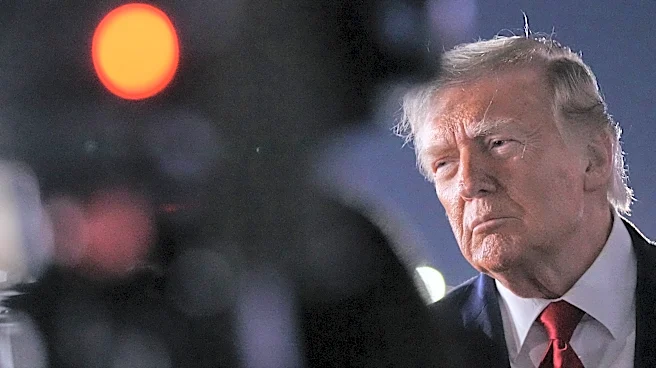
stations, and surveillance radar sites near the Strait of Hormuz. This military response was initiated after President Trump vowed to retaliate against what he termed as 'unjustified Iranian aggression.' In retaliation, Iran's Revolutionary Guard claimed to have targeted US bases in Bahrain and Jordan, including facilities supporting US F-35 stealth fighter aircraft. The situation has escalated tensions in the region, with Bahraini authorities advising residents to seek shelter.
Why It's Important?
This development marks a significant escalation in US-Iran relations, potentially impacting regional stability in the Middle East. The US military's response underscores its commitment to protecting its assets and personnel in the region, while Iran's retaliatory actions highlight the ongoing volatility and potential for further conflict. The strikes could affect global oil markets, given the strategic importance of the Strait of Hormuz, a critical chokepoint for oil transportation. Additionally, the incident may influence US foreign policy and military strategy in the Middle East, as well as international diplomatic efforts to de-escalate tensions.
What's Next?
The immediate future may see increased military readiness and heightened security measures at US bases in the region. Diplomatic channels may be engaged to prevent further escalation, with potential involvement from international bodies seeking to mediate the conflict. The US and its allies might also consider additional sanctions or diplomatic actions against Iran. Meanwhile, regional actors, including Gulf states, will likely monitor the situation closely, balancing their security concerns with economic interests tied to oil exports.