
What's Happening?
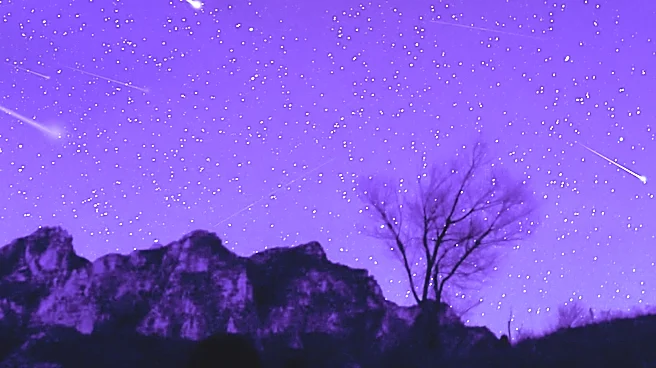
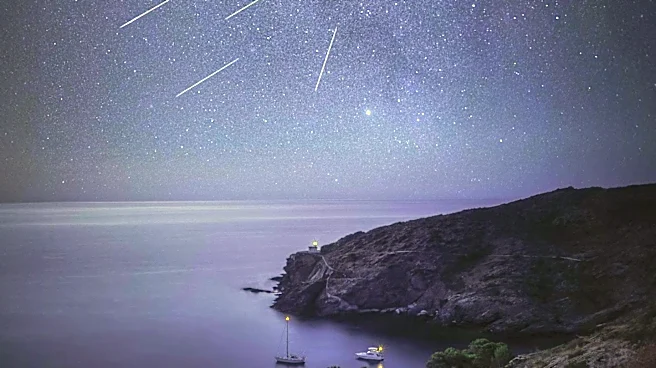
The Perseid meteor shower is set to peak on the night of August 12 into the early morning of August 13, 2026. This annual event occurs as Earth passes through debris left by Comet Swift-Tuttle, resulting in bright streaks of light as comet dust enters
the atmosphere. This year, the viewing conditions are expected to be optimal due to a New Moon on August 12, which will provide dark skies ideal for meteor observation. The Perseids are active from July 17 to August 24, with the peak offering the best chance to see around 80 meteors per hour. Observers in the Northern Hemisphere are encouraged to look towards the northeast after dark, allowing their eyes 30 minutes to adjust to the darkness for the best viewing experience.
Why It's Important?
The Perseid meteor shower is one of the most popular annual astronomical events, particularly in the Northern Hemisphere. Its visibility is enhanced this year by the absence of moonlight, which often obscures fainter meteors. This event not only provides a spectacular natural display but also serves as an opportunity for public engagement with astronomy. It encourages people to explore the night sky and fosters interest in space science. The event can also have educational benefits, as it provides a practical example of celestial mechanics and the interaction between Earth and cometary debris.
What's Next?
Following the peak of the Perseid meteor shower, skywatchers can look forward to other astronomical events in August 2026. Venus will reach its greatest eastern elongation from August 14-16, appearing bright in the western sky after sunset. Additionally, a partial lunar eclipse will occur on August 27-28, visible from much of North and South America, as well as parts of Europe and Africa. These events continue to offer opportunities for public engagement and education in astronomy.