





What's Happening?
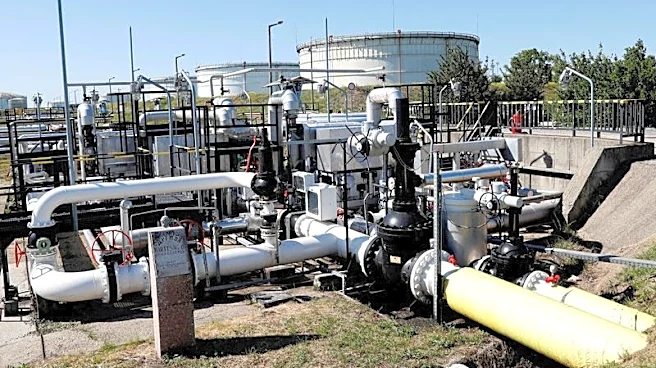
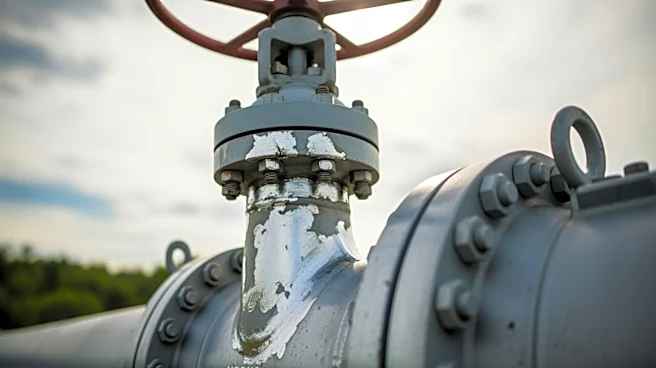
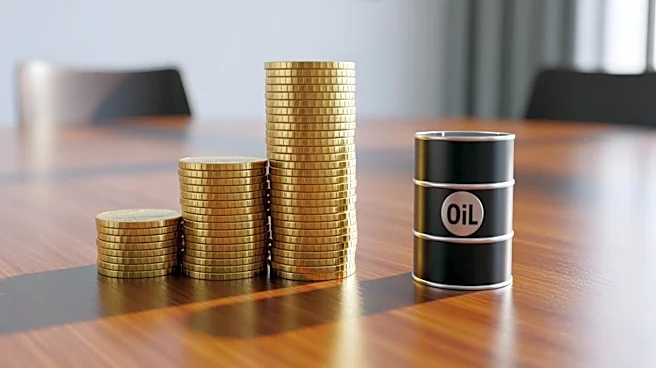
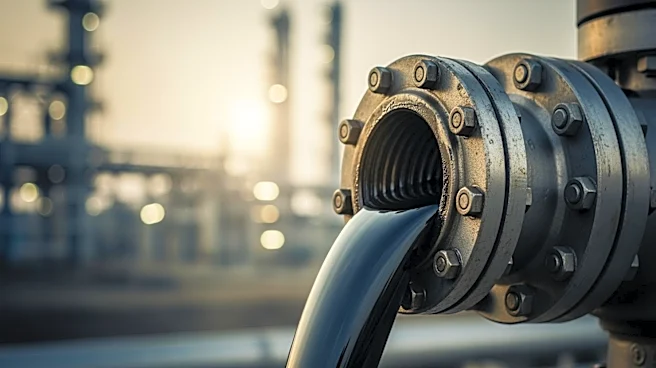
Ukraine has restarted the flow of Russian oil to Europe through the Druzhba pipeline, enabling the European Union to proceed with a 90-billion-euro loan for Kyiv. The resumption follows a standoff over pipeline repairs, with Hungary and Slovakia set to receive
shipments soon. The development allows Hungary to lift its veto on the EU loan, which aims to support Ukraine's liquidity through 2026 and 2027. The EU is also preparing a new round of sanctions against Russia, targeting its energy, banking, and trade sectors. The pipeline's capacity ranges from 1.2 to 2 million barrels of oil per day.
Why It's Important?
The resumption of oil deliveries is a critical step in resolving the EU's financial support for Ukraine, providing a much-needed economic lifeline amid ongoing conflict with Russia. The loan will help stabilize Ukraine's economy, supporting its efforts to counter Russian aggression. Additionally, the new sanctions package reflects the EU's commitment to maintaining pressure on Moscow, potentially impacting Russia's economic stability. The situation highlights the complex interplay between energy supply, geopolitical tensions, and economic policy, with significant implications for EU-Russia relations and regional stability.
What's Next?
With the loan expected to be formally approved soon, Ukraine will receive financial support to bolster its economy and continue its resistance against Russian forces. The EU's new sanctions package will likely be implemented, further straining Russia's economic sectors. As Hungary transitions to new leadership, its stance on EU-Russia relations may evolve, influencing future policy decisions. The ongoing conflict and energy dynamics will continue to shape diplomatic and economic strategies, with potential shifts in alliances and regional power balances.