


What's Happening?
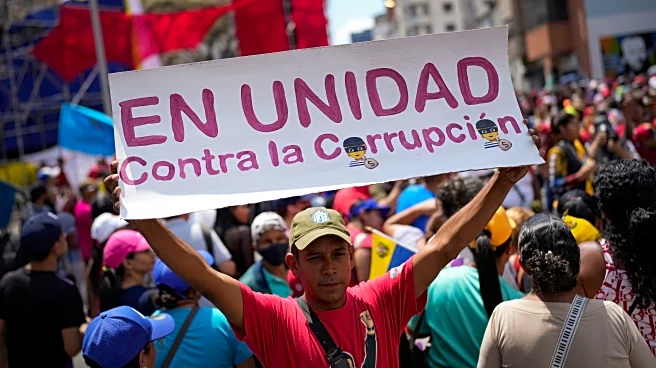
Venezuela's National Assembly has swiftly passed a bill criminalizing activities that disrupt navigation and commerce, such as the seizure of oil tankers. This legislative move comes in response to recent actions by U.S. forces, which seized two tankers carrying
Venezuelan oil in international waters. These seizures are part of President Trump's ongoing pressure campaign against Venezuelan leader Nicolás Maduro. The new law, which was introduced, debated, and approved within two days, imposes fines and prison sentences of up to 20 years for those involved in acts deemed as piracy or blockades against commercial entities operating with Venezuela. The bill also mandates the executive branch to develop incentives and protections for businesses affected by such acts. The measure now awaits Maduro's signature to become law.
Why It's Important?
The passage of this bill highlights the escalating tensions between the U.S. and Venezuela, as President Trump intensifies efforts to undermine Maduro's regime. By criminalizing the seizure of oil tankers, Venezuela aims to protect its economic interests and counteract U.S. sanctions. This development could further strain U.S.-Venezuela relations and impact global oil markets, as Venezuela seeks to maintain its oil exports despite international pressure. The bill's approval also underscores the Venezuelan government's determination to resist external interference and safeguard its sovereignty. For the U.S., these actions represent a strategic move to weaken Maduro's hold on power by targeting the country's vital oil industry.
What's Next?
With the bill awaiting Maduro's signature, its implementation could lead to increased legal and diplomatic confrontations between Venezuela and the U.S. The Venezuelan government may also seek to strengthen alliances with other nations to counteract U.S. actions. Meanwhile, the U.S. is likely to continue its pressure campaign, potentially leading to further seizures or sanctions. The international community will be closely watching these developments, as they could have significant implications for regional stability and global energy markets. Businesses operating in or with Venezuela may need to reassess their strategies in light of the new legal framework and potential risks.