
What's Happening?
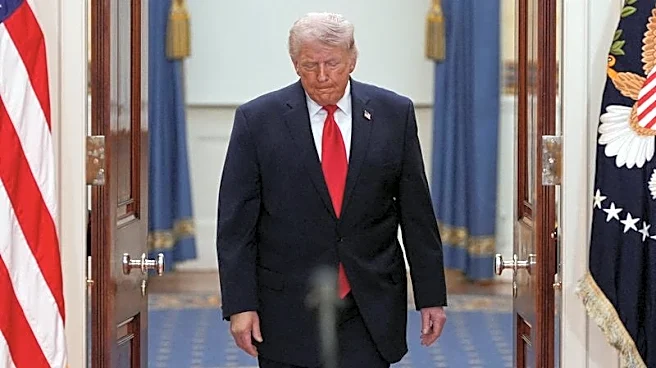
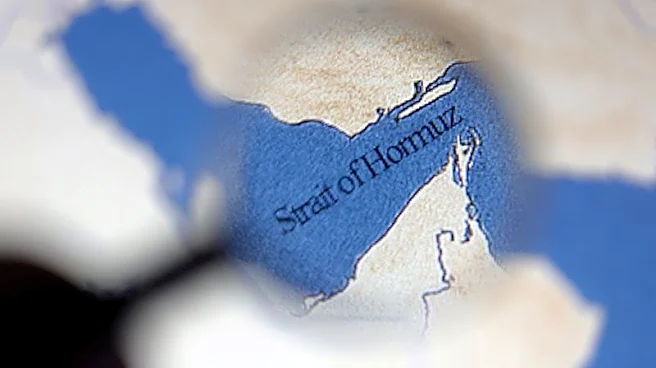
President Trump has announced plans for a naval blockade of the Strait of Hormuz following unsuccessful ceasefire talks with Iran. The decision comes after more than 21 hours of negotiations in Islamabad,
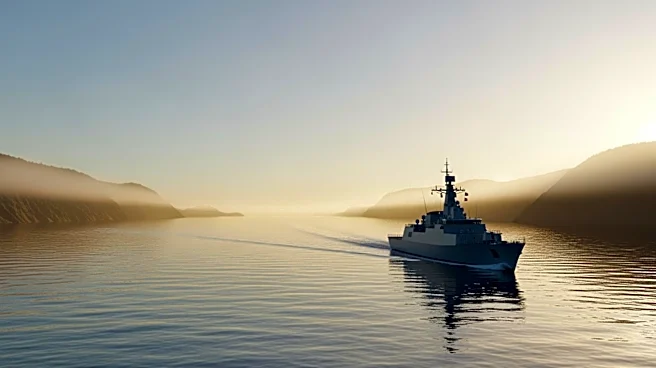
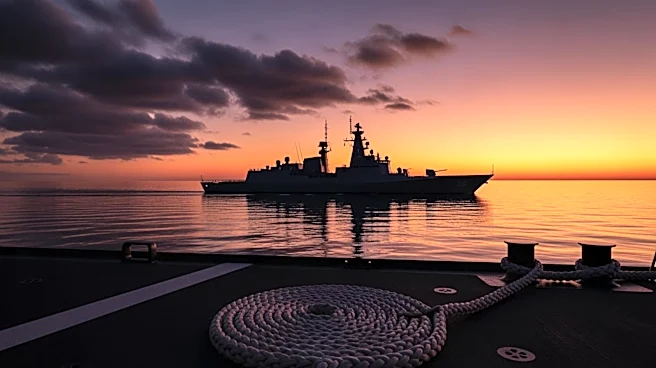
Pakistan, which ended without an agreement to reopen the strait or extend the ceasefire. Trump has instructed the U.S. Navy to block any ships attempting to enter or leave the strait, accusing Iran of extorting global shipping and laying mines in the waterway. The blockade is intended to prevent Iran from controlling the strait, through which 20% of the world's oil flows, and to deter foreign governments from supplying weapons to Tehran.
Why It's Important?
The naval blockade represents a significant escalation in U.S.-Iran relations and could have far-reaching consequences for global energy markets and geopolitical stability. The Strait of Hormuz is a critical chokepoint for oil transportation, and any disruption could lead to increased oil prices and economic instability. The blockade tests U.S. naval dominance against Iran's asymmetric tactics, which aim to make shipping dangerous without directly confronting American forces. The move also signals a shift in U.S. strategy, as Trump warns countries like China and Russia against supplying weapons to Iran, potentially straining international relations.
What's Next?
With the ceasefire talks ending without a deal, U.S. and Iranian officials are reassessing their positions. The enforcement of a naval blockade would require sustained naval deployments and coordination with allies. Shipping companies and energy markets are bracing for continued disruption, as heightened U.S. enforcement and Iran's harassment could keep traffic through the strait below normal levels. The situation remains fluid, and further diplomatic efforts may be necessary to prevent escalation.
Beyond the Headlines
Iran's ability to disrupt shipping without engaging in direct naval conflict highlights the effectiveness of asymmetric warfare tactics. The use of mines, drones, and fast-attack craft allows Iran to control the strait without relying on large warships. This approach challenges traditional naval strategies and underscores the need for innovative solutions to maritime security. The blockade also raises ethical and legal questions about the use of military force in international waters and the impact on global trade.