





What's Happening?
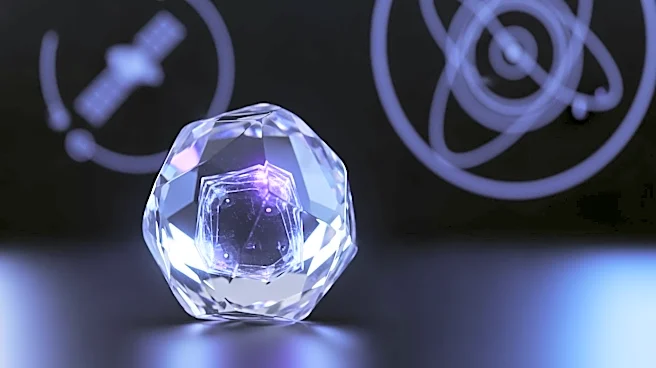
Scientists at Xinjiang University in China have reportedly developed a new ultraviolet (UV) producing crystal that could significantly enhance navigation systems by enabling the creation of highly accurate thorium nuclear clocks. These clocks could potentially
allow submarines and deep-space probes to navigate without relying on Global Positioning Systems (GPS). The development aims to address the vulnerabilities of current GPS systems, which can be jammed or spoofed, and are ineffective underwater or underground. The new crystal can convert laser light into very short wavelength ultraviolet light, achieving a record-breaking wavelength of 145.2 nanometers, which is crucial for the precision required in these advanced clocks.
Why It's Important?
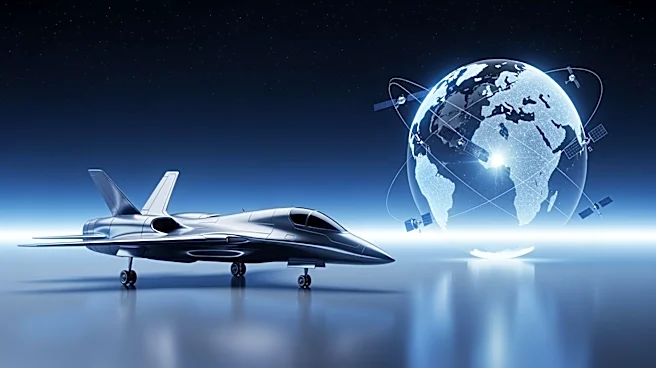
The development of this crystal could have profound implications for military and space technology. By reducing reliance on GPS, which is susceptible to interference, military submarines and missiles could operate more securely and effectively. This advancement could also benefit spacecraft, allowing them to navigate autonomously in deep space without Earth-based corrections. The potential for such technology to make navigation systems immune to jamming and spoofing represents a significant strategic advantage, particularly in military applications where secure and reliable navigation is critical.
What's Next?
If the technology is perfected, it could lead to widespread adoption in military and space sectors, potentially prompting other nations to develop similar technologies to maintain strategic parity. The focus will likely be on further refining the crystal's capabilities to achieve the precise wavelengths needed for thorium nuclear clocks. Additionally, there may be increased interest in exploring other applications of this technology, such as in civilian navigation systems or other industries where precise timekeeping is essential.