
What's Happening?
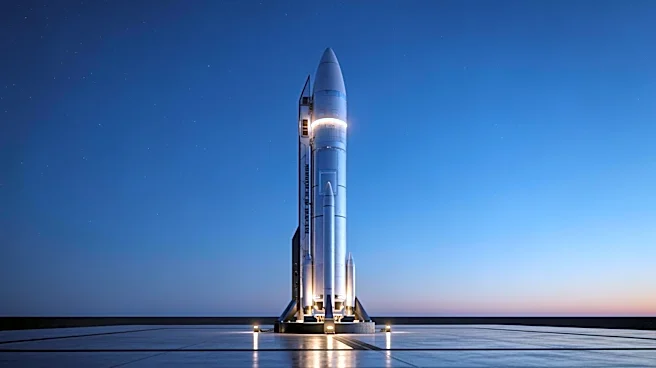
SpaceX has successfully assembled the first full Starship V3 stack at its Starbase facility in Texas. This marks a significant milestone in the company's mission to advance space travel, particularly with
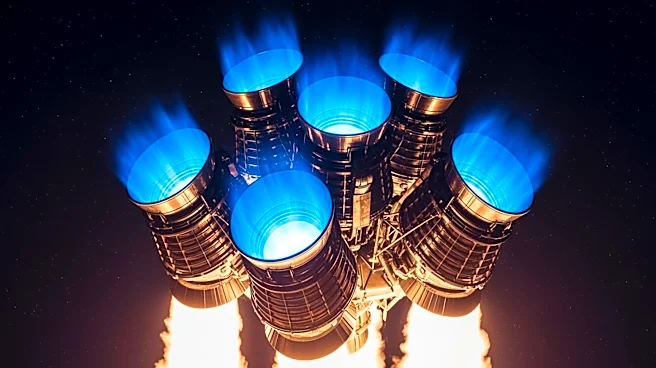
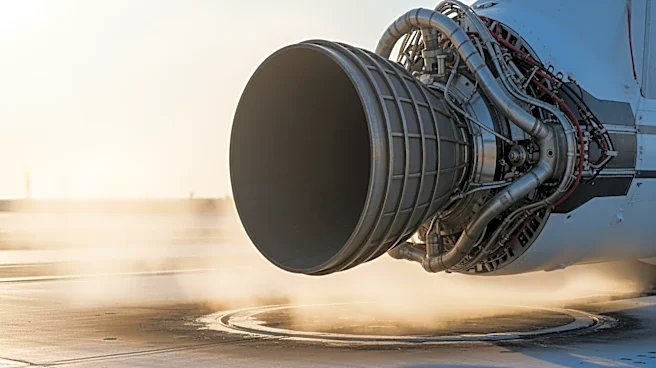
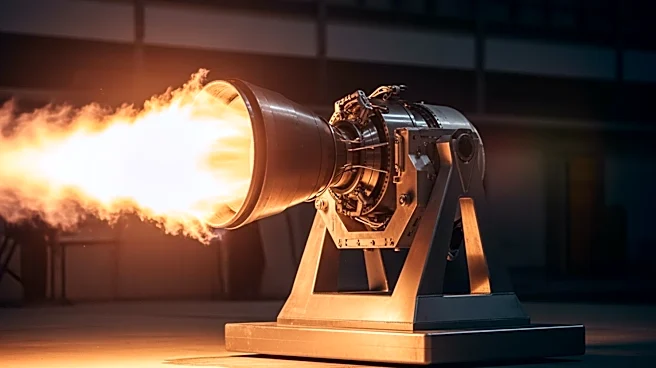
its ambitions to reach Mars. The Starship V3, standing at 124 meters tall, is the tallest rocket ever built and features the new Raptor 3 engines. These engines provide 22% more thrust than their predecessors, making the rocket more powerful and efficient. The V3 model also includes stretched propellant tanks and improved heat-shield tiles, enhancing its capabilities for space missions. The assembly of Ship 39 atop Booster 19 sets the stage for the debut orbital flight, targeted for no earlier than May 12.
Why It's Important?
The successful assembly of the Starship V3 represents a major advancement in reusable rocket technology, which is crucial for reducing the cost of space travel. This development could significantly impact the future of space exploration, enabling more frequent and cost-effective missions to the Moon, Mars, and beyond. The increased thrust and efficiency of the Raptor 3 engines, along with the rocket's reusable design, could revolutionize the aerospace industry by making space travel more accessible. This milestone also positions SpaceX as a leader in the race to establish a human presence on other planets, potentially opening new opportunities for scientific research and commercial ventures in space.
What's Next?
Before the Starship V3's debut orbital flight, SpaceX plans to conduct a wet dress rehearsal, which involves a full fueling test without an actual launch. This step is crucial to verify the functionality of all systems. If successful, the V3 could deliver up to 150 metric tonnes to low-Earth orbit per flight, with minimal refurbishment needed between launches. This capability would be a game-changer for space logistics and could accelerate plans for manned missions to Mars. The aerospace community and potential commercial partners will be closely watching the upcoming tests and launch, as they could set new standards for space travel.